
 English
 EN
EN FRENCH
 繁体中文
繁体中文





Why Web Scraping Gets Blocked and How Residential Proxies Improve Data Collection
Discover why web scraping requests get blocked and how residential proxies, static IPs, and smart rotation improve data collection stability and regional accuracy.

Web scraping projects may encounter rate limits, verification pages, or temporary restrictions even when the script works correctly. These issues are often related to poor IP reputation, excessive request volume, inconsistent locations, or unstable sessions. Residential proxies can improve connection quality, but they must be combined with responsible request management.
Residential proxies route traffic through IP addresses associated with consumer internet service providers. They are commonly used for permitted public data collection, market research, price monitoring, localized testing, and ad verification. However, no residential proxy can guarantee unrestricted access or replace compliance with website policies.
Why Web Scraping Requests Get Restricted
Websites may evaluate IP type, request frequency, cookies, browser headers, session behavior, and geographic consistency. High request volumes, repetitive intervals, or sudden location changes can make traffic appear unusual. Restrictions may also occur when a project uses low-quality IP ranges or ignores rate-limit responses.
Proxy quality can improve network stability, but request behavior remains equally important. Scraping systems should control concurrency, introduce reasonable delays, and reduce activity when access limits are detected. This creates a more stable and responsible data collection process.
Residential Proxies and Datacenter Proxies
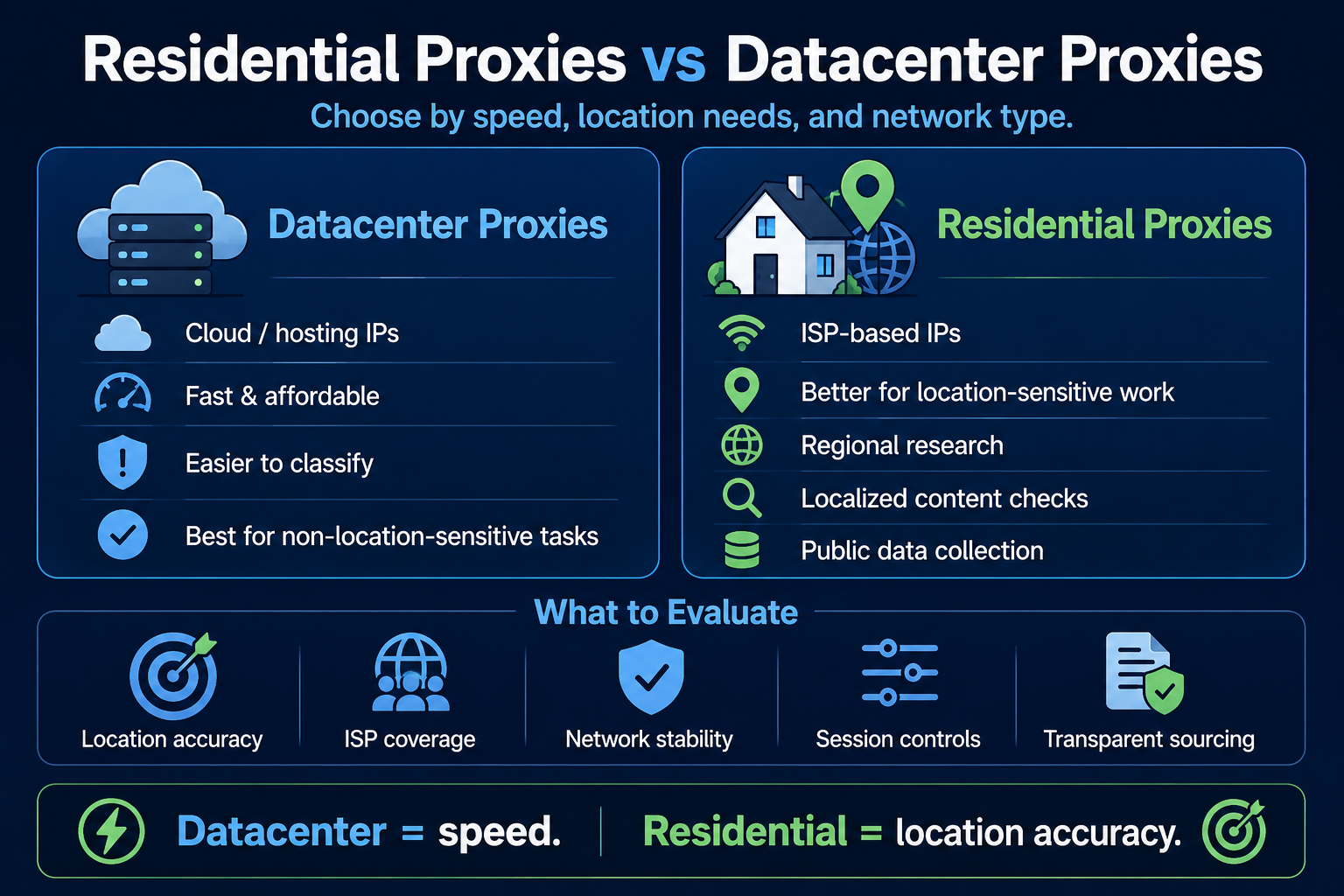
Datacenter proxies originate from cloud or hosting networks. They are generally fast and affordable, but their network type may be easier for websites to classify. They can still support tasks that do not require precise location targeting or consumer network characteristics.
Residential proxies use IP addresses associated with internet service providers. They are better suited to location-sensitive workflows such as regional research, localized content checks, and public data collection. When choosing residential proxies, evaluate location accuracy, ISP coverage, network stability, session controls, and transparent IP sourcing.
Static Residential Proxies for Stable Sessions
Static residential proxies maintain the same IP address for an extended period. They are useful for workflows that require stable cookies, consistent regional settings, or multi-step website navigation. Typical applications include website testing, long research sessions, e-commerce monitoring, and advertising reviews.
A static residential proxy can reduce unnecessary IP changes and improve session continuity. It is usually the better option when maintaining one location is more important than distributing requests. Static proxies should not be used to avoid authentication requirements, account restrictions, or security controls.
Proxy Rotation for Larger Projects
Proxy rotation distributes permitted requests across multiple residential IP addresses. It can support public data collection across many products, pages, search results, or geographic markets. This reduces dependence on a single address and helps organize traffic across a wider proxy pool.
Rotation should match the structure of the workflow. Changing IPs during every request may interrupt cookies, regional preferences, or multi-step navigation. Session-based rotation is often more practical because one IP remains active for a defined browsing period.
Responsible Web Scraping Practices
A proxy is only one part of a reliable web scraping setup. Projects should use reasonable request intervals, control concurrent connections, and respond appropriately to rate-limit messages. Headers, cookies, proxy locations, and session settings should remain consistent during each session.
Only collect information that is publicly accessible and permitted for the intended purpose. Review website terms, robots.txt instructions, privacy obligations, copyright requirements, and applicable data protection laws. Do not use proxies to bypass CAPTCHAs, authentication systems, paywalls, access controls, or account enforcement measures.
Market Research and Ad Verification
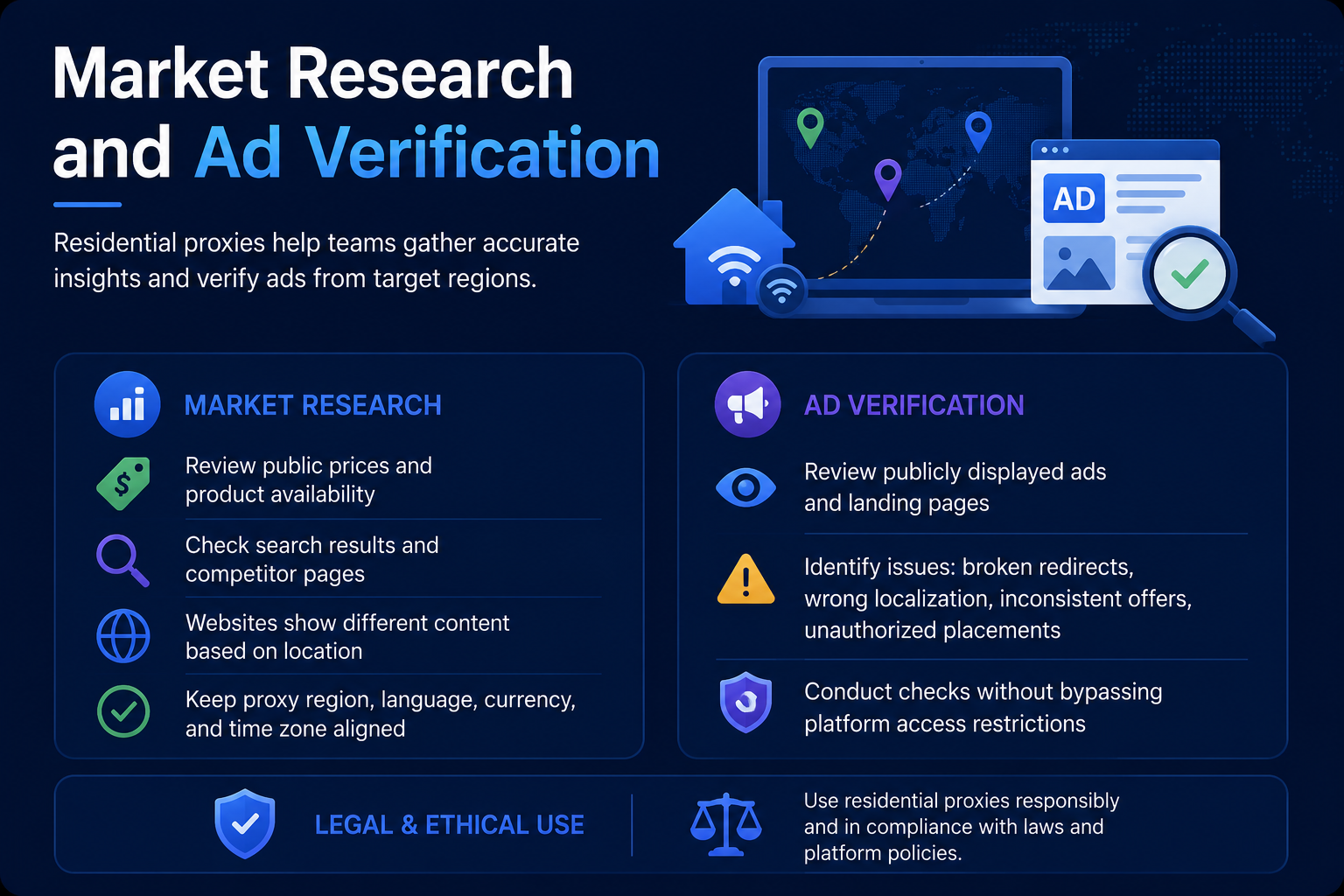
Residential proxies can help research teams review public prices, product availability, search results, and competitor pages from selected regions. Accurate location targeting matters because websites may display different currencies, products, promotions, or content based on location. The proxy region, browser language, currency, and time zone should remain aligned.
For ad verification, residential proxies can support reviews of publicly displayed advertisements and landing pages. Teams may use them to identify broken redirects, incorrect localization, inconsistent offers, or unauthorized placements. These checks should be conducted without bypassing platform access restrictions.
Choosing the Right Residential Proxy
Choose rotating residential proxies for permitted data collection across many pages, products, or regions. Choose static residential proxies when a workflow requires a stable IP, persistent cookies, or consistent multi-step navigation. Some projects may use both types for separate and clearly defined tasks.
Reliable web scraping depends on high-quality IPs, controlled request frequency, accurate targeting, and responsible data practices. Explore Swiftproxy residential proxies for web scraping, market research, price monitoring, localized testing, and ad verification.
About the author
 Top-tier residential proxy solutions
 {{item.title}}
Related articles

 51
51


- Please provide your account number, or email address.
- Provide videos or screenshots, and simply describe the problems you are facing.
- Our staff will reply to your message within 24 hours.



