
 English
 EN
EN FRENCH
 繁体中文
繁体中文




Top IPRoyal Alternatives for 2026 You Should Consider
IPRoyal is solid, but it's not always the right fit. In 2024, IPRoyal's revenue reportedly grew by about 50% in a crowded market of more than 250 proxy providers, which shows that demand is high and competition is fierce. If you're looking for a proxy stack that matches your workload and budget, this guide is for you. Below are the 10 best IPRoyal alternatives in 2026, all vetted against real user feedback, key features, pricing, and practical use cases.


10 Top IPRoyal Alternatives
1. Swiftproxy
Swiftproxy is one of the most complete alternatives to IPRoyal. You get residential and ISP proxies under one roof. It's especially strong for teams that want to consolidate everything into a single platform instead of juggling multiple providers.
Features:
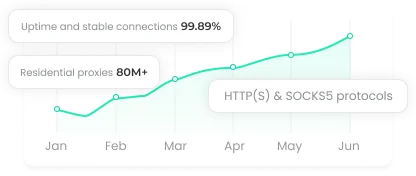
80M+ residential proxies across 195+ countries and regions
Flexible pricing that can drop to about $0.7/GB at volume.
99% uptime, with rotation modes you control (per request, time-based, sticky)
Strong API + dashboard for automation and monitoring
Best for: teams that want one reliable vendor for all proxy types.
2. Bright Data
Bright Data is the heavyweight in the proxy space. If you need large-scale infrastructure and built-in data tools, it's one of the strongest IPRoyal alternatives available.
Features:
150M+ IPs across 195 countries
Built-in tools: Web Unlocker, Web Scraper API, SERP API
Pay-as-you-go can start around $4/GB, depending on plan
Best for: enterprises that need both proxies and a full data stack.
3. Oxylabs
Oxylabs is built for enterprise-grade data collection and large-scale operations. If you're running long-term scraping projects, it's one of the most reliable IPRoyal alternatives.
Features:
175M+ IPs across 195 countries
Offers Web Unblocker + scraping APIs
Pricing can drop to $3.5–$5/GB at scale
Best for: teams that need high reliability and strong support.
4. Decodo
Decodo is designed for mid-market teams that want a clean interface, strong coverage, and straightforward pricing.
Features:
125M+ IPs across 195 countries
Easy dashboard + API with simple rotation options
Pricing drops to $3–$4/GB at volume
Best for: growing teams that want quick setup and scalable pricing.
5. SOAX
SOAX focuses on quality residential and cellular proxies, with very granular targeting and strong filtering options.
Features:
155M+ IPs with city & ASN targeting
Pricing starts around $3.60/GB, dropping to $0.32/GB at high volume
Short trials available for performance testing
Best for: highly targeted campaigns and localized testing.
6. NetNut
NetNut's strongest differentiator is its static + rotating residential networks, which is rare in this market.
Features:
52M rotating + 1M static IPs
Pricing ranges from $3.5/GB down to $1.87/GB
Strong support for HTTP/HTTPS/SOCKS5
Best for: teams needing long-lived sessions and anti-fraud checks.
7. Webshare
Webshare is a solid option for teams who want global coverage without high upfront cost.
Features:
80M+ proxies across 195 countries
Free tier (10 proxies, ~1GB/month)
Pricing starts around $3.5/GB and drops with volume
Best for: small teams testing performance before scaling.
8. Proxy-Cheap
Proxy-Cheap is the budget-friendly alternative that still provides a solid mix of proxy types and global reach.
Features:
Multi-million IPs across 127 countries
Pricing starts around $2.99/GB
Includes rotating/static residential, LTE, datacenter IPv4/IPv6
Best for: cost-sensitive projects that don't need enterprise tools.
9. Rayobyte
Rayobyte emphasizes ethical sourcing and long-lived static options. If you need predictable, volume-based billing, it's one of the best IPRoyal alternatives.
Features:
40M+ IPs in 100+ GEOs
Pricing from $3.50/GB down to $0.90/GB
Unlimited threads and sticky sessions
Best for: large monthly traffic with predictable billing.
10. PacketStream
PacketStream is a P2P residential network with a simple pricing model. If your priority is low cost and straightforward billing, it's a strong alternative.
Features:
190+ countries coverage
Flat $1/GB pricing (with ~50GB minimum)
HTTP/HTTPS/SOCKS support
Best for: teams prioritizing low cost over advanced features.
Conclusion
There's no single best proxy provider—only the one that fits your needs. IPRoyal is a strong option, but if you need better pricing, wider coverage, or more stability, these 10 alternatives are worth considering. The smart approach is to define your use case, run a small trial to verify performance, and then scale up with the provider that delivers the best results.
About the author
 Top-tier residential proxy solutions
 {{item.title}}
Related articles

 407
407


- Please provide your account number, or email address.
- Provide videos or screenshots, and simply describe the problems you are facing.
- Our staff will reply to your message within 24 hours.