
 English
 EN
EN FRENCH
 繁体中文
繁体中文




Stop Proxy Disconnects with 180-Minute Sticky IPs
Learn how 180-minute sticky residential IPs prevent session disconnects during multi-step web scraping, browser automation, and market research workflows.

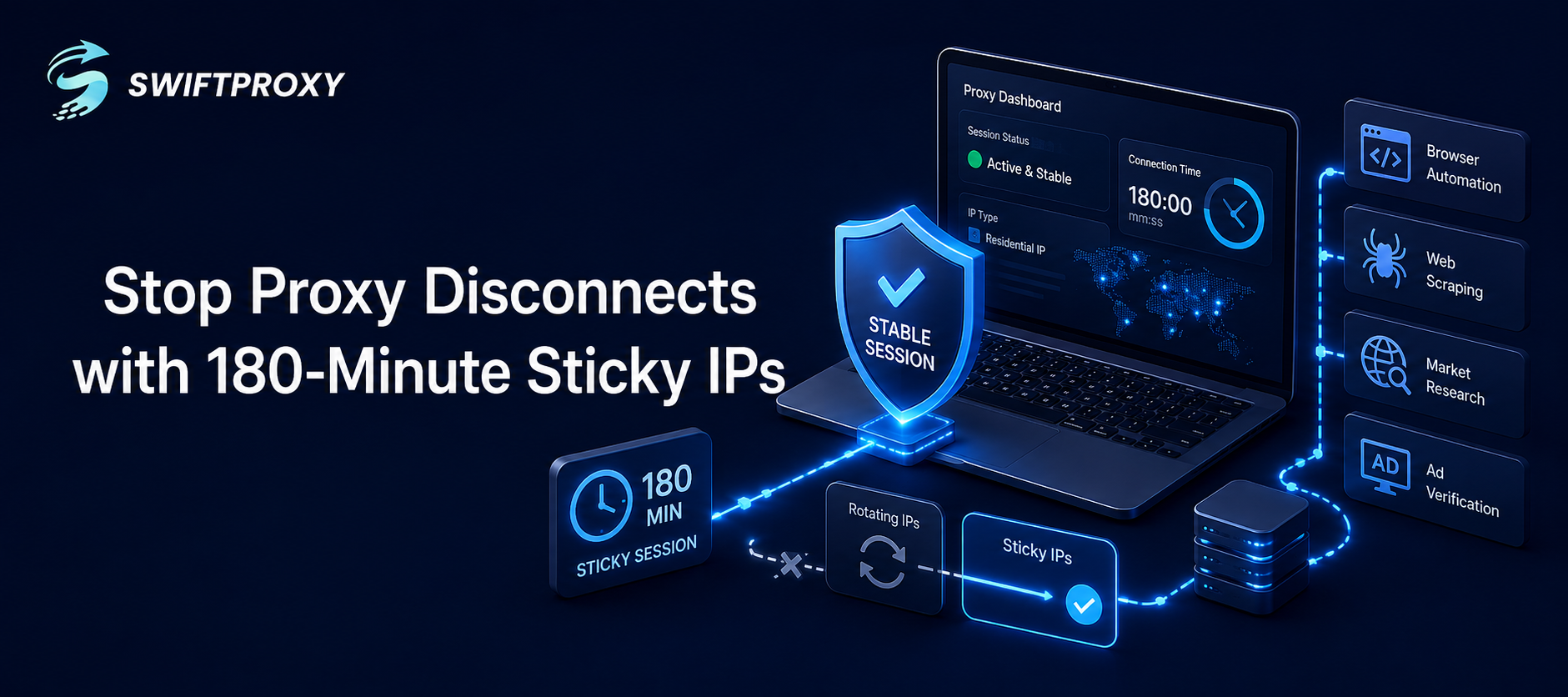
Long forms, browser automation, and multi-step scraping tasks can quickly fail when the proxy IP changes halfway through a session. While proxy rotation is valuable for large-scale data collection, some workflows need the same IP long enough to complete several connected actions. A long-duration sticky residential IP provides that extra session stability without giving up access to a rotating residential proxy pool.
Why Frequent Proxy Rotation Causes Disconnects
Rotating residential proxies regularly assign new exit IPs, which works well when requests are independent. However, websites may associate cookies, login sessions, location settings, or browsing activity with the current IP address. If that IP changes unexpectedly, users may encounter interrupted forms, expired sessions, repeated authentication, or inconsistent page results.
This matters most for tasks such as web scraping, browser automation, product monitoring, market research, and ad verification. In these cases, keeping one IP throughout a complete workflow is often more practical than rotating after every few requests. The proxy can then rotate once the task is finished.
How 180-Minute Sticky Residential IPs Help
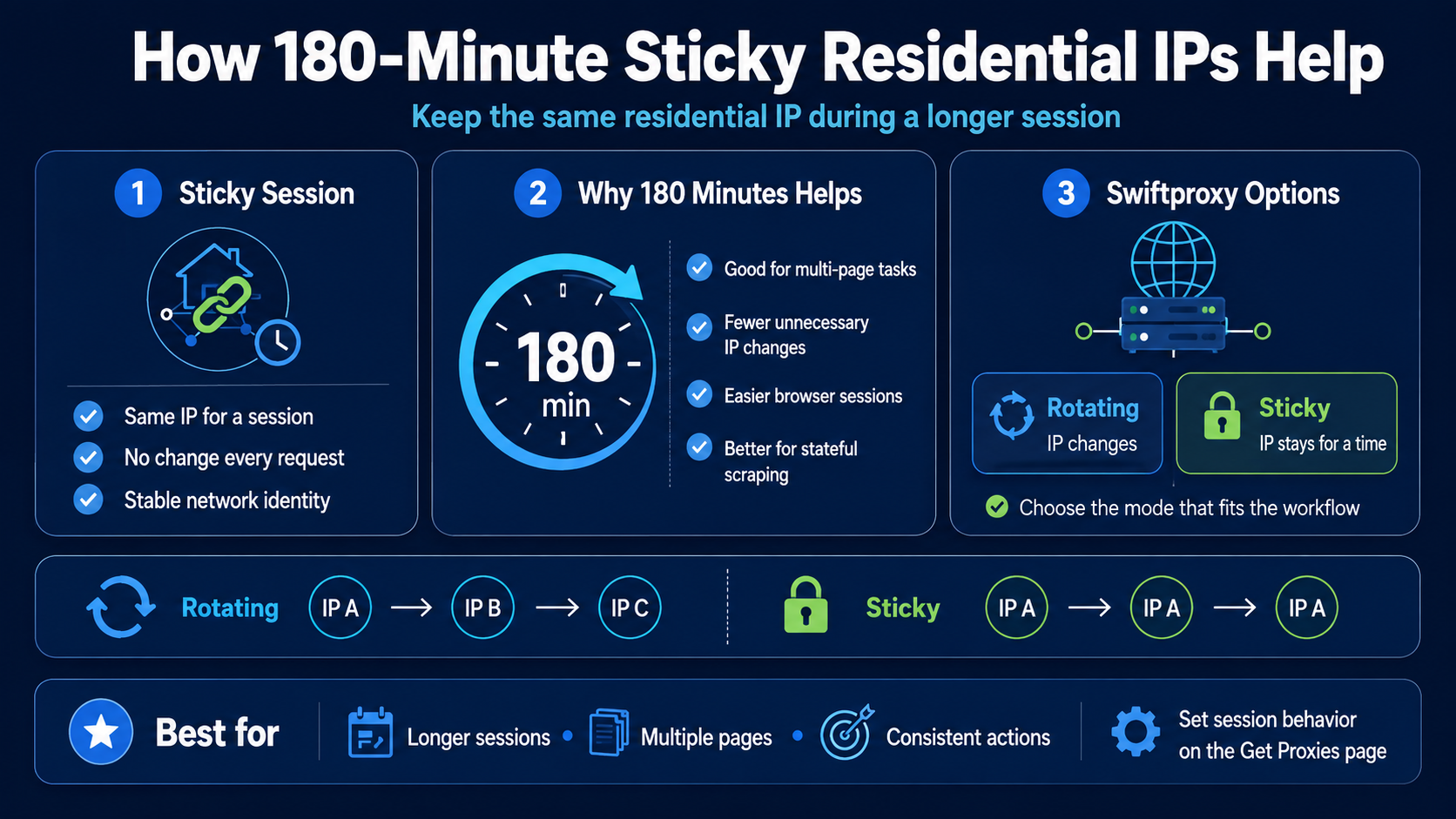
A sticky residential proxy keeps the same residential IP for a defined session instead of automatically changing it with every request. Swiftproxy Residential Proxies support both rotating and sticky connection modes, allowing users to choose the approach that fits their workflow. Longer sticky sessions are especially useful when a process must maintain the same network identity across multiple pages or actions.
Instead of sending requests through IP A → IP B → IP C, a sticky session can keep them on IP A → IP A → IP A. This reduces unnecessary IP changes during stateful tasks and makes longer browser or scraping sessions easier to manage. Users can configure proxy session behavior from Swiftproxy's Get Proxies page.
More Stable Web Scraping Workflows
Not every web scraping project benefits from aggressive IP rotation. A scraper may need to open a category page, apply filters, follow pagination, and collect data from several related pages within the same session. Keeping one residential IP during those steps can help maintain a more consistent browsing environment.
For large numbers of unrelated URLs, rotating residential proxies may still be the better choice. The key is to rotate between logical tasks rather than changing IPs in the middle of an active process. This gives scraping teams a better balance between IP diversity and session continuity.
Better Market Research and Ad Verification
Location consistency is also important for market research, because prices, promotions, search results, and ecommerce content can vary by region. Using the same residential IP during one research session helps teams compare related pages from a more consistent geographic perspective. It also reduces unnecessary variables when gathering public market information.
The same principle applies to ad verification. Teams checking regional ads, landing pages, redirects, or campaign variations may need to maintain the same location and IP identity during a test. A sticky residential session makes those checks easier to repeat before intentionally rotating to another IP or location.
Sticky Residential vs Static Residential Proxies
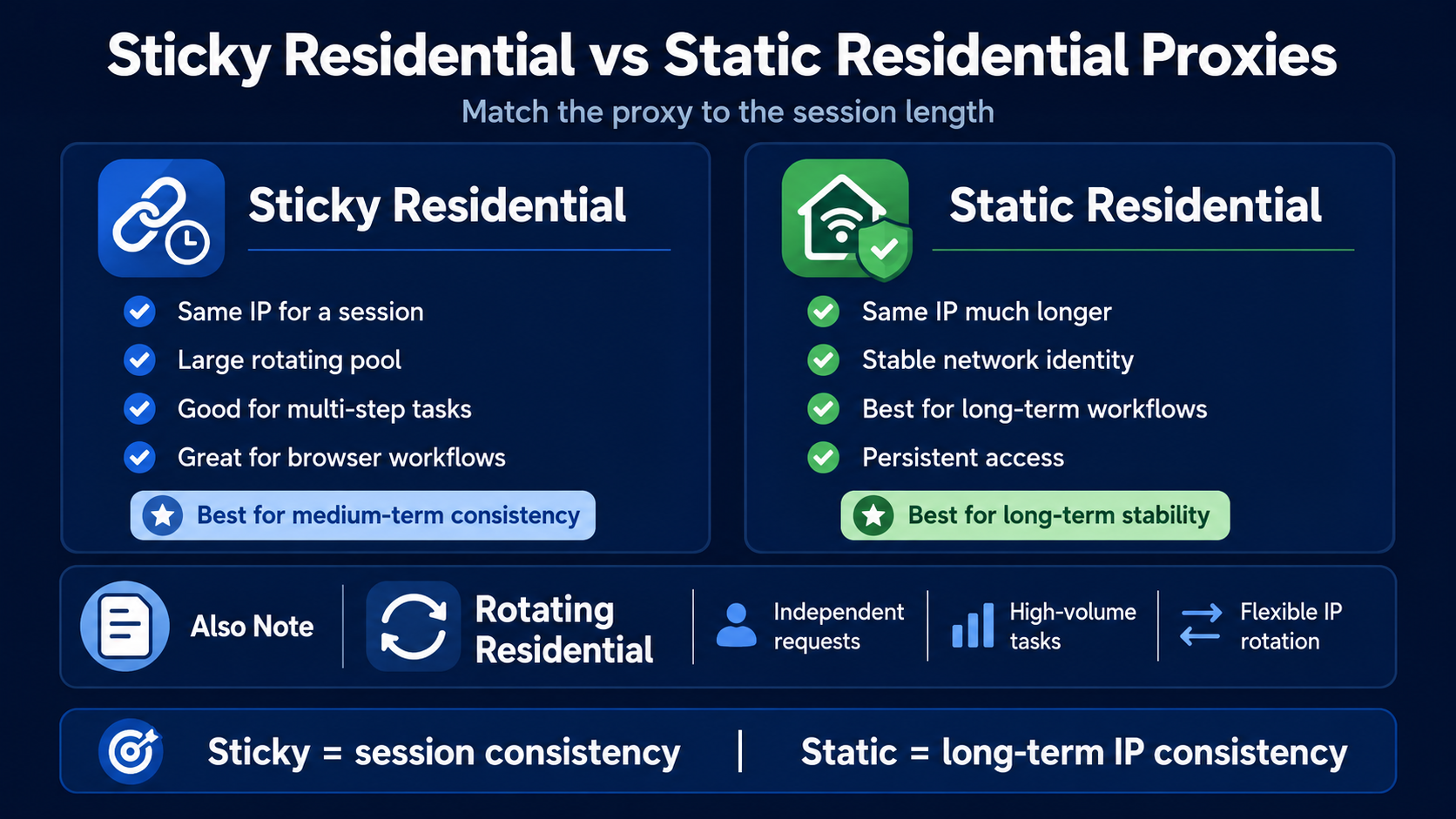
Sticky sessions are suitable when you need IP consistency for a limited workflow but still want access to a large rotating pool. For projects that require the same IP for much longer periods, Swiftproxy Static Residential Proxies provide a more persistent option. They are better suited to workloads where maintaining a stable network identity is a long-term requirement.
In practice, rotating residential proxies work best for independent high-volume requests, while sticky residential proxies fit multi-step sessions and browser workflows. Static residential proxies are the stronger choice when long-term IP consistency matters most. Matching the proxy type to the session length can improve both reliability and operational efficiency.
Keep Long-Running Proxy Sessions Stable
Frequent IP changes should not be the reason a long-running task fails. Sticky residential proxies provide a practical middle ground between aggressive proxy rotation and a permanently static IP. For web scraping, market research, ad verification, and browser automation, choosing the right session duration can make workflows noticeably more stable and easier to manage.
About the author
 Top-tier residential proxy solutions
 {{item.title}}
Related articles

 14
14


- Please provide your account number, or email address.
- Provide videos or screenshots, and simply describe the problems you are facing.
- Our staff will reply to your message within 24 hours.