
 English
 EN
EN FRENCH
 繁体中文
繁体中文





Kimi Code CLI Proxy Setup for Web Scraping and AI Agents
Learn how to configure Swiftproxy residential, sticky, and static proxies with Kimi Code CLI to build scalable AI agent web scraping and market research workflows.

Why Use a Proxy with Kimi Code CLI
Kimi Code CLI can help developers create scripts, execute commands, process files, debug code, and automate data collection workflows directly from the terminal.
When those workflows depend on live web data, however, the AI agent is only one part of the system. Large-scale scraping can encounter rate limits, location-dependent content, unstable sessions, and IP-based restrictions.
A residential proxy adds a network layer between the scraping script and the target website.
Kimi Code CLI → Scraping Script → Residential Proxy → Website → Structured Data
Kimi Code CLI handles automation and data processing, while the proxy controls the IP address, location, and session used for each request.
For projects that need a large pool of residential IPs, Swiftproxy offers Residential Proxies with rotating and sticky session options.
Basic Kimi Code CLI Proxy Setup
One of the simplest approaches is to let Kimi Code CLI create or manage a Python scraping script that sends requests through a proxy.
Store proxy credentials in environment variables rather than directly in the source code.
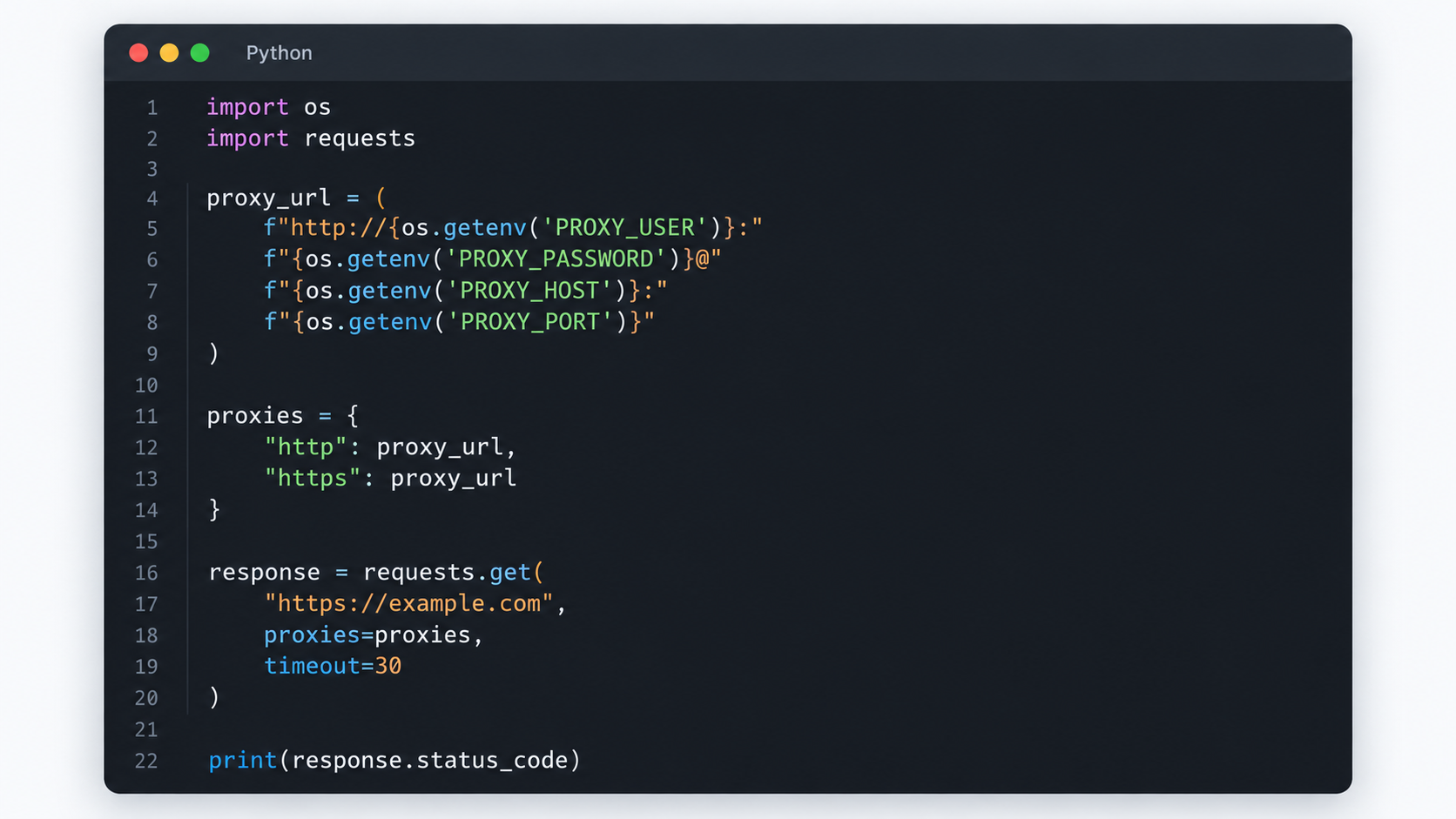
Kimi Code CLI can then extend the script to crawl multiple URLs, extract specific fields, save results as JSON or CSV, handle failed requests, and analyze the collected data.
For larger projects, the same architecture can be used with dedicated Web Scraping Proxies.
Use Rotating Residential Proxies for Large-Scale Scraping
Rotating residential proxies are useful when an AI agent needs to process many independent URLs.
Instead of sending every request through the same IP, proxy rotation distributes traffic across a larger residential IP pool. This is particularly useful for:
- Product and price monitoring
- Ecommerce data collection
- SERP tracking
- Competitor research
- Market research
For example, Kimi Code CLI could build a scraper that collects prices from thousands of product pages while the residential proxy layer rotates IP addresses between requests or jobs.
Rotation should still be combined with sensible request rates, timeout handling, caching, and retry logic. Changing an IP does not replace good scraping architecture.
Use Sticky Sessions for Multi-Step AI Agent Tasks
Not every request should use a new IP.
Some Kimi Code CLI workflows involve several related actions. An agent might open a page, follow links, apply filters, and collect information across multiple requests.
Changing the IP halfway through that sequence may create inconsistent sessions. Sticky residential proxies solve this by keeping the same IP for a defined period.
A practical strategy is:
One task → One sticky IP → Rotate after the task
This makes sticky sessions useful for browser automation, multi-page scraping, and longer AI agent workflows.
Swiftproxy residential proxies support rotating and sticky sessions, including sessions designed for longer-running AI tasks.
When Static Residential Proxies Are Better
Some workflows need the same IP for much longer than a typical scraping session.
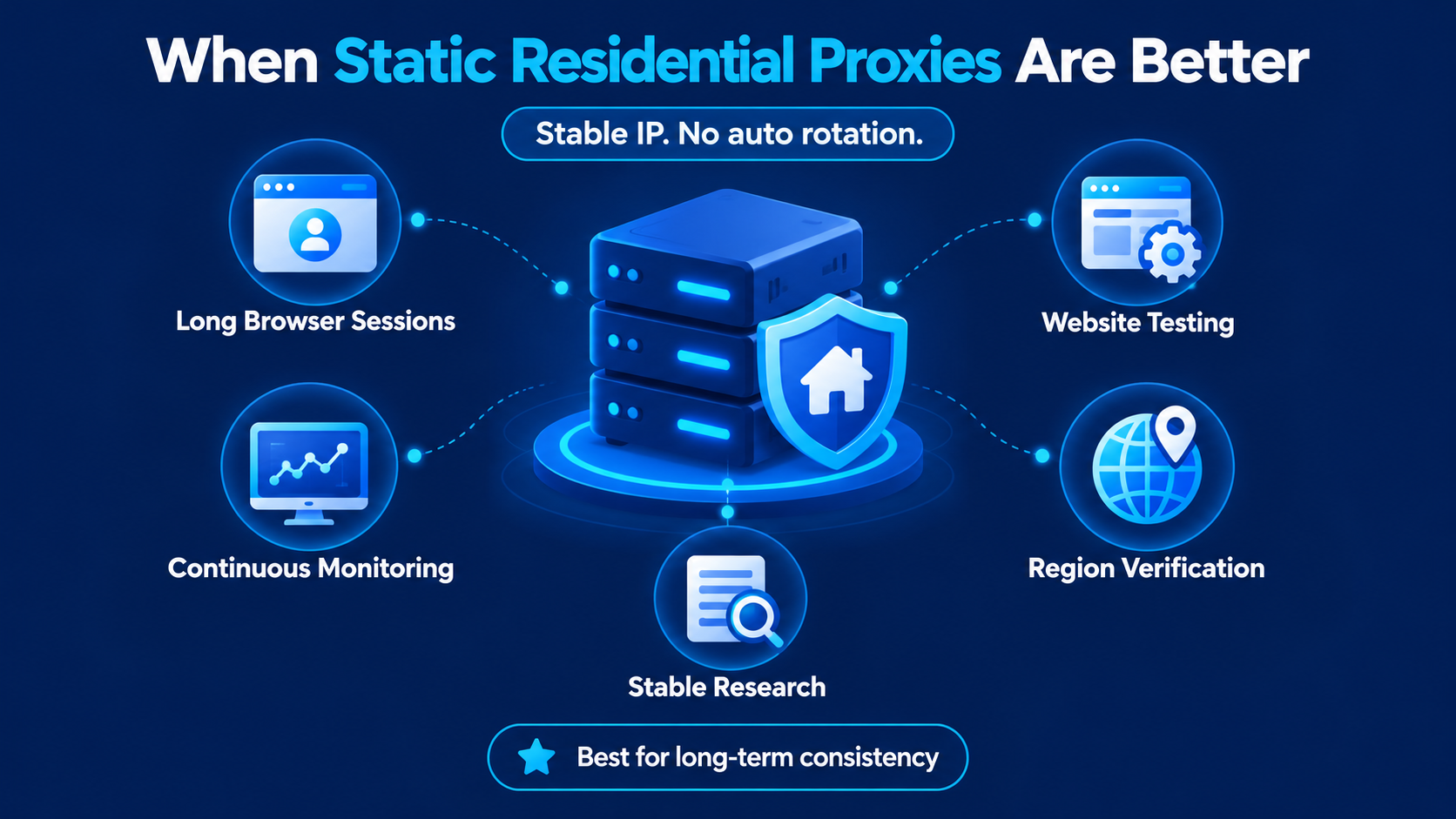
Static residential proxies, also known as ISP proxies, provide a stable IP instead of automatically rotating it. They are better suited to applications where network identity needs to remain consistent.
Common examples include:
- Long-running browser sessions
- Repeated website testing
- Continuous monitoring
- Region-specific verification
- Stable research environments
For these scenarios, Swiftproxy Static Residential Proxies provide dedicated ISP-based IPs with stable connections.
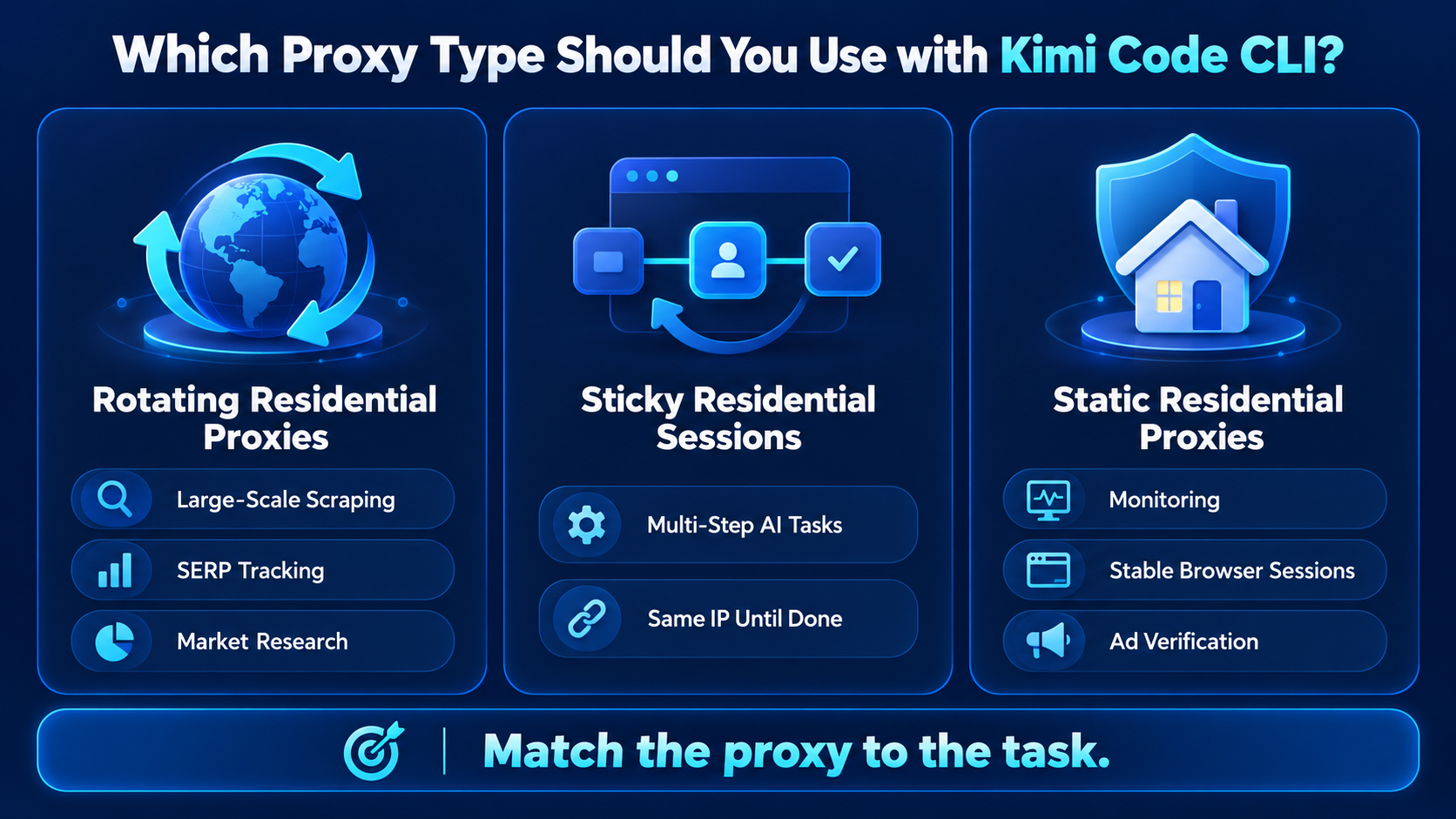
The choice is therefore straightforward. Use rotating residential proxies when IP diversity matters, sticky sessions when short-term continuity matters, and static residential proxies when long-term consistency matters.
Market Research with Kimi Code CLI
Market research is a natural use case for AI agents and residential proxies.
Kimi Code CLI can help create workflows that collect public information such as prices, product availability, promotions, competitor listings, or regional content. Residential proxies can then run those requests from different geographic locations.
For example, an AI agent could collect the price of the same product from several markets, normalize the results, and generate a regional comparison.
This approach is useful for:
- Competitor intelligence
- Price comparison
- Product monitoring
- Regional market analysis
- Consumer trend research
Swiftproxy provides dedicated proxies for market research for collecting localized public data across different markets.
Ad Verification and Geo-Targeting
Online advertising often changes depending on a user's geographic location. Ads, landing pages, currencies, promotions, and campaign creatives may all differ between regions.
Residential proxies make it possible to test how campaigns appear from different locations without physically being present in each market.
Kimi Code CLI can automate this process by creating scripts that visit target pages, collect campaign information, compare results, and flag unexpected differences.
Rotating residential proxies work well when checking many markets. Static or sticky residential proxies are more suitable when repeated checks need a consistent IP.
For dedicated campaign monitoring, see Swiftproxy's Ad Verification Proxies.
Best Practices for AI Web Scraping
Proxies are only one part of a reliable web scraping system. AI agent workflows should also use reasonable request rates, retry limits, caching, timeout handling, and response validation.
A scraper should avoid requesting the same information unnecessarily. Reusing recently collected data can reduce traffic, improve performance, and lower infrastructure costs.
Developers should also follow applicable laws, website terms, authentication requirements, and data access policies when building automated collection workflows.
The goal is not to rotate IP addresses as frequently as possible. The goal is to design a reliable data collection workflow that uses the right session strategy for each task.
Which Proxy Type Should You Use with Kimi Code CLI
For large-scale web scraping, SERP tracking, or broad market research, rotating residential proxies are usually the best starting point.
For multi-step AI agent workflows, use sticky residential sessions so the same IP remains active until the task is complete.
For long-running monitoring, stable browser sessions, or repeated ad verification, static residential proxies provide a more consistent network identity.
Matching the proxy type to the task is more effective than using the same rotation strategy for every workflow.
Conclusion
Kimi Code CLI can automate the development, execution, and analysis parts of a web data workflow, while residential proxies provide the network infrastructure required to access public data across different IP addresses and locations.
Rotating residential proxies are well suited to large-scale web scraping and market research. Sticky sessions provide continuity for multi-step AI agent tasks, while static residential proxies offer a stable IP for long-running workflows and ad verification.
If you are building an AI-powered web data pipeline, explore Swiftproxy Residential Proxies for rotating and sticky sessions or Static Residential Proxies when your workflow requires a persistent IP.
FAQ
Can Kimi Code CLI be used for web scraping?
Yes. Kimi Code CLI can help developers create, execute, debug, and improve scraping scripts while other tools handle HTTP requests and data extraction.
Why use residential proxies with Kimi Code CLI?
Residential proxies allow scraping workflows to use residential IP addresses from different locations, making them useful for web scraping, market research, localized testing, and ad verification.
Should I use rotating or static residential proxies?
Use rotating residential proxies for large numbers of independent requests. Use sticky sessions for multi-step tasks and static residential proxies when a long-term stable IP is required.
How often should proxies rotate?
There is no universal rotation interval. Independent scraping jobs can rotate frequently, while stateful workflows should normally keep the same IP until the current task is complete.
Are residential proxies useful for geo-targeted research?
Yes. Geographic proxy targeting can help researchers compare publicly available prices, search results, advertisements, and website content across different markets.
About the author
 Top-tier residential proxy solutions
 {{item.title}}
Related articles

 369
369


- Please provide your account number, or email address.
- Provide videos or screenshots, and simply describe the problems you are facing.
- Our staff will reply to your message within 24 hours.



