
 FRENCH
 EN
EN FRENCH
 繁体中文
繁体中文




Fingerprint Browser Still Flagged? Check Your IP
Learn why fingerprint browsers still face security checks during unexpected IP switches, and how static residential proxies improve long-term session stability.

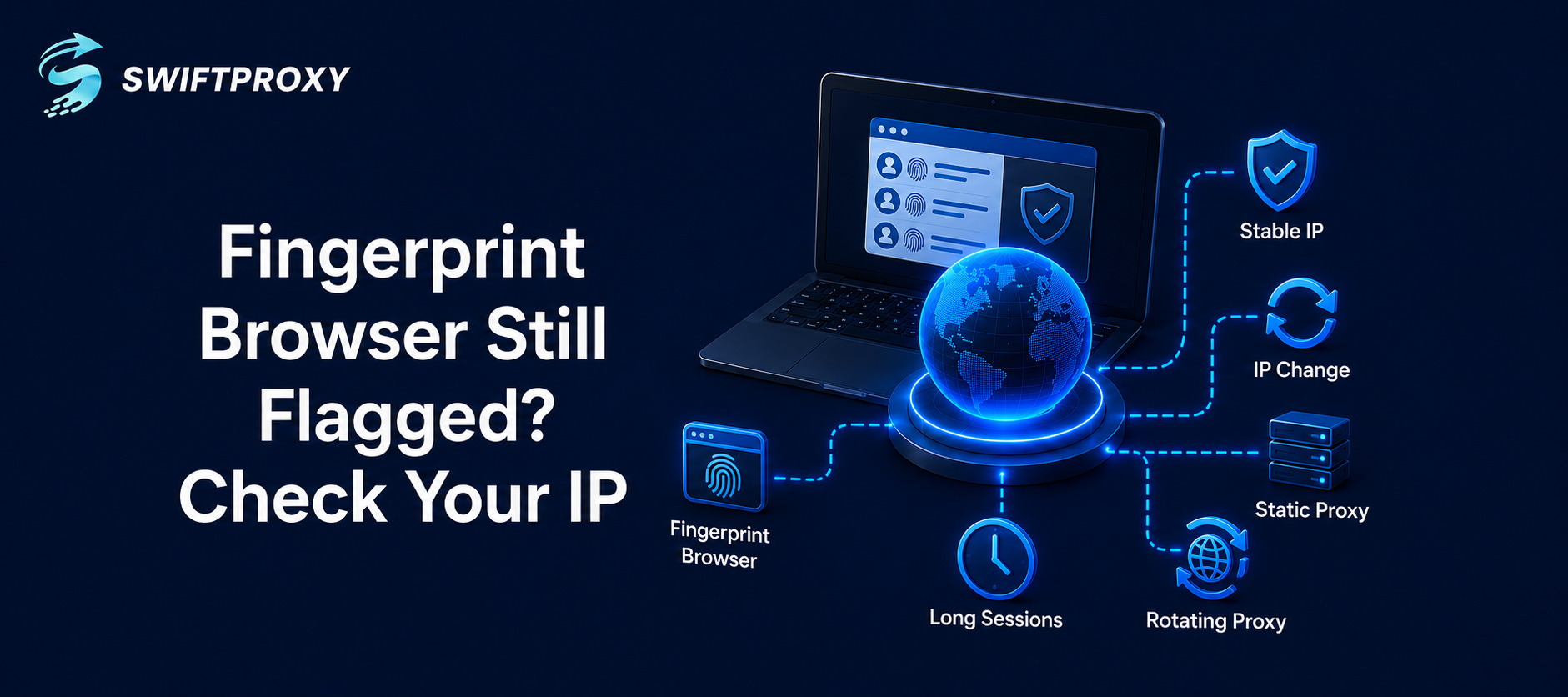
A fingerprint browser can keep cookies, browser settings, and profile data separated, but it cannot control what happens at the network level. If your proxy changes IP addresses during an active session, the website may suddenly see the same browser connecting from a different network or location.
For long-term browser sessions, this matters. A consistent browser profile combined with an unstable IP can still trigger additional verification or unexpected login interruptions.
What Happens When Your IP Changes Mid-Session
Imagine logging into an account from New York and using it normally. A few minutes later, the proxy rotates and the same session suddenly appears to come from Chicago.
Nothing changes on your screen, but the website now sees a different IP address and possibly a different geographic location. Websites may also evaluate cookies, browser information, login history, and connection behavior, so an unexpected IP switch can make the session appear less consistent.
An IP change does not automatically cause an account restriction. However, avoiding unnecessary network changes can improve stability for long-term sessions.
Why a Fingerprint Browser Cannot Control Your IP
A fingerprint browser mainly manages browser-level information such as cookies, local storage, browser settings, and profile data. The public IP address comes from the proxy.
If a rotating residential proxy assigns a new IP after a reconnect or rotation interval, the fingerprint browser cannot stop it. The browser environment may remain unchanged while the network environment changes underneath it.
This is why the proxy type should match the task. Some workflows benefit from frequent IP rotation, while others need one stable connection.
When Proxy Rotation Makes Sense
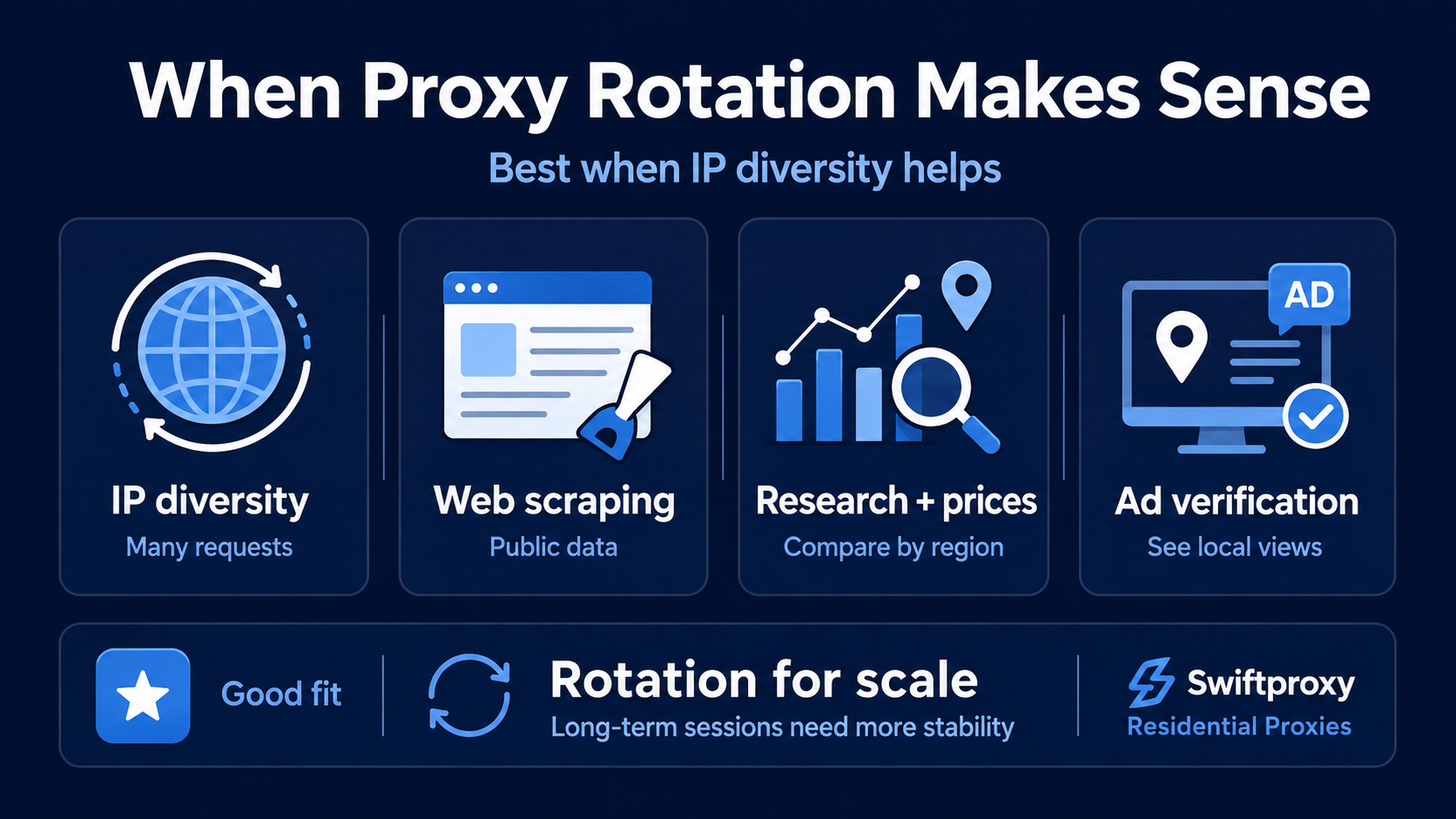
Rotating residential proxies are useful when IP diversity is part of the workflow. They are commonly used for web scraping, market research, price monitoring, and ad verification because these tasks often involve multiple locations or large numbers of public requests.
For example, market researchers may compare prices, search results, or localized content across different regions. Ad verification teams may check how campaigns and landing pages appear in target markets.
For these use cases, Swiftproxy Residential Proxies provide access to rotating residential IPs and flexible geographic coverage.
Proxy rotation works best when changing IPs supports the task. Long-term browser sessions usually have different requirements.
Why Static Residential Proxies Fit Stable Sessions
A static residential proxy keeps the same IP address instead of rotating continuously. This makes it more suitable for workflows where the browser profile needs a predictable network environment over a longer period.
If the same profile is regularly used for an authorized business dashboard or regional workflow, switching IPs during the session adds an unnecessary change. Keeping one IP reduces that variable and makes the connection easier to manage.
Swiftproxy Static Residential Proxies are designed for tasks where stable IP access matters more than frequent rotation. They are suitable for long-term browser sessions, repeated regional testing, and other workflows that require a consistent connection.
A static IP does not guarantee that a website will never request verification. Its main value is reducing avoidable IP changes during active or repeated sessions.
Static Residential Proxy vs Sticky Session
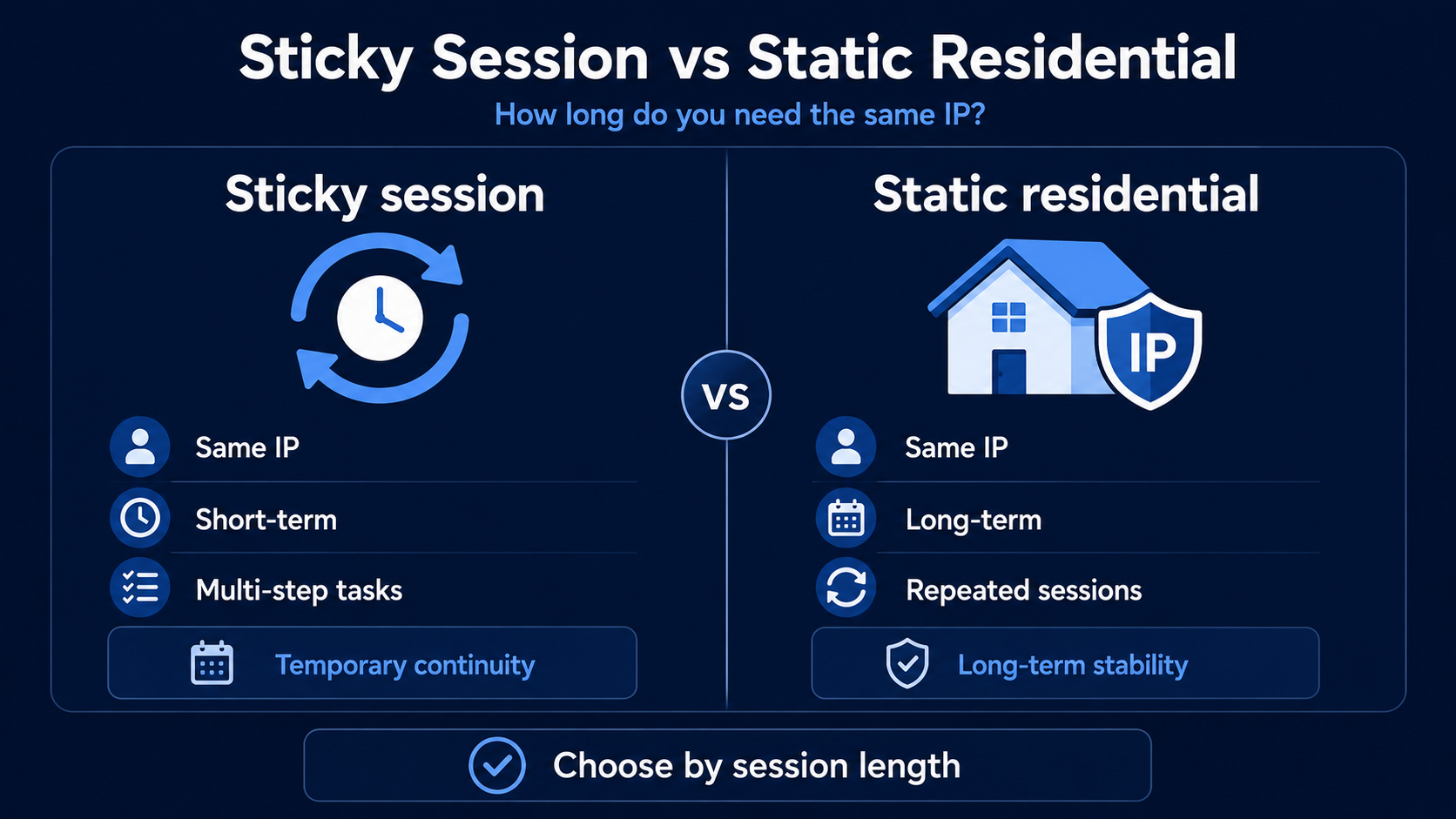
Sticky residential sessions also provide IP consistency, but usually for a limited period. They are useful for shorter multi-step workflows where several connected requests should use the same IP.
Static residential proxies are more suitable when the same IP is needed over longer periods or across repeated sessions. In simple terms, sticky sessions provide temporary continuity, while static residential proxies are built for longer-term IP stability.
The right choice depends on how long your workflow needs to maintain the same network connection.
Choose the Right Proxy for the Task
There is no single proxy strategy for every use case. Rotating residential proxies are usually better for web scraping, public data collection, market research, price monitoring, and ad verification because these activities benefit from IP diversity.
Static residential proxies are a better fit when a browser profile needs a stable IP for extended sessions or repeated authorized access. Before starting an important session, check whether the proxy is rotating, sticky, or static, and confirm that the expected IP and location are active.
Matching the proxy to the workflow is more important than simply choosing the option with the largest IP pool.
Keep the Browser and IP Consistent
A fingerprint browser can separate browser profiles, but it cannot prevent the proxy underneath them from changing IP addresses. If the IP switches unexpectedly, the browser may stay consistent while the network identity changes.
Use proxy rotation when IP diversity is useful for tasks such as web scraping, market research, and ad verification. Use static residential proxies when the priority is a stable, long-term connection.
For persistent browser sessions, a predictable IP can be just as important as a consistent browser profile.
Note sur l'auteur
 Solutions proxy résidentielles de haut niveau
 {{item.title}}
Articles liés

 53
53


- Veuillez fournir votre numéro de compte ou votre adresse courriel.
- Fournissez des vidéos ou des captures d'écran et décrivez simplement les problèmes auxquels vous êtes confronté.
- Notre personnel répondra à votre message dans les 24 heures.