
 English
 EN
EN FRENCH
 繁体中文
繁体中文




How Proxies Improve Your Facebook Automation
Every marketer knows the frustration. You log in to Facebook, fire up your automation tools, and suddenly your account gets flagged. One wrong move, and hours of work vanish. Automation can save you time, but it can also put your accounts at risk. That's where proxies come in. This guide covers everything you need to know about using proxies for Facebook automation. From grasping what a Facebook proxy is to configuring it for practical use—you'll receive clear, actionable steps to automate safely and confidently.

Understanding Facebook Proxy Server
A Facebook proxy server acts as a middleman between you and Facebook. Instead of connecting directly, your traffic flows through the proxy first. This masks your real IP address and lets you manage multiple accounts or automate tasks without tripping Facebook's security systems.
Think of it as a disguise for your automation. Facebook sees requests coming from different, legitimate IPs. Your automation activities blend into normal user traffic. The result? Reduced risk of IP restrictions, fewer rate-limit issues, and smoother automation overall.
Why Use Proxies for Facebook
Managing one account is tricky enough. Managing dozens? That's a minefield. Facebook tracks IPs, monitors behavior, and flags suspicious patterns instantly. Without proxies, your automation can backfire. Temporary bans—or worse, permanent lockouts—are just a click away.
Here's why proxies are critical:
- Hiding IP: Assign unique IPs to each account or session. One IP for multiple accounts? Big risk.
- Overcoming Restrictions: Distribute requests across many IPs to bypass Facebook's rate limits.
- Enhanced Security: Protect your real IP and reduce exposure to targeted attacks.
- Scalable Automation: Proxies let you safely post content, send messages, or manage ads at scale without triggering alarms.
If you want automation to work reliably, proxies are the foundation.
Choosing Facebook-Friendly Proxies
Understanding the types of proxies is key. Here's what works—and what doesn't:
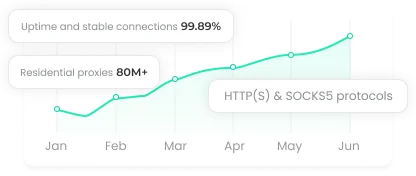
- Residential Proxies: Real-device IPs; low detection risk; ideal for serious automation.
- SOCKS5 Proxies: Fast, low-latency, supports multiple protocols; great for automation tools.
- Datacenter Proxies: Cheap and fast but easier for Facebook to detect; use cautiously.
- Rotating vs. Sticky Proxies: Rotating changes IPs often to avoid detection; sticky keeps the same IP for longer sessions. Each has a purpose depending on your workflow.
Choosing the right mix ensures speed, reliability, and safety.
How to Automate Facebook with Proxies
Setting up proxies isn't complicated—but it requires care. Follow these steps:
- Pick a Trusted Provider: Residential and SOCKS5 proxies, optimized for Facebook, are essential.
- Set Up Your Tools: Enter IP, port, username, and password into your automation software or browser.
- Check the Connection: Verify IP changes by visiting an IP-check site or logging into Facebook.
- Manage Sessions: Rotate IPs or use sticky sessions depending on the number of accounts.
- Track Performance: Track speed, bans, and alerts. Adjust as needed.
- Stay Within Facebook Guidelines: Automation is safer when it mimics natural behavior.
Follow these steps, and your automation becomes reliable, efficient, and low-risk.
Conclusion
Facebook automation is powerful when done correctly. Using residential and SOCKS5 proxies from a reliable provider protects your accounts, improves performance, and allows you to scale safely. Proxies help mask your IP, minimize bans, and keep your automation running smoothly.
About the author
 Top-tier residential proxy solutions
 {{item.title}}
Related articles

 437
437


- Please provide your account number, or email address.
- Provide videos or screenshots, and simply describe the problems you are facing.
- Our staff will reply to your message within 24 hours.