
 English
 EN
EN FRENCH
 繁体中文
繁体中文




What Drives the Choice Between ISP and Residential Proxies
Speed or stealth. That's the real trade-off—and it shapes everything that follows. Pick wrong, and you either get blocked fast or move too slowly to matter. Pick right, and your workflows run clean, stable, and under the radar. Both ISP and residential proxies hide your IP address. That part is simple. What's not simple is how differently they behave under pressure—rate limits, bot detection, geo checks, and long-running sessions all expose their strengths and weaknesses quickly. Let's understand them.

Understanding ISP Proxies
ISP proxies sit in an interesting middle ground. They are hosted on data center servers, but they carry IP addresses registered with internet service providers. That combination matters more than it sounds.
In practice, you get the performance of a data center with the trust level of a residential IP. Sites see them as legitimate users, not obvious automation. That's why they hold up better than standard data center proxies when detection systems get aggressive.
Think of them as engineered stability. Fast. Consistent. Harder to flag than pure server-based IPs.
Benefits and Limitations of ISP Proxies
ISP proxies shine when consistency matters. They don't depend on real users being online, so connections stay stable and predictable. If you're running scripts, managing accounts, or automating actions that need the same identity over time, this is a big advantage.
They also tend to offer:
- High speed with low latency
- Stable uptime without random disconnects
- Fixed IPs for long sessions
- Often unlimited bandwidth
That said, they are not perfect. Coverage can be limited, especially outside major regions. Subnet diversity is also tighter, which means large-scale operations can still get flagged if you're not rotating or refreshing IPs carefully.
Use ISP proxies when session consistency and speed are more important than blending into massive crowds of users.
Understanding Residential Proxies
Residential proxies route your traffic through real devices—laptops, phones, home routers—connected via actual ISPs. That's their core strength. You are not pretending to be a user. You look exactly like one.
These IPs rotate frequently. Every request can come from a different user, location, or network. You can also enable sticky sessions if you need short-term consistency.
The result is simple. Extremely high trust. Extremely low detection rates. But there's a cost. Speed and stability are less predictable because you're relying on real-world connections.
Benefits and Limitations of Residential Proxies
If your priority is staying undetected, residential proxies are hard to beat. Their diversity is massive. Millions of IPs across countries, cities, and even specific ISPs.
They are especially strong for:
- Bypassing strict anti-bot systems
- Accessing geo-restricted content precisely
- Large-scale data collection without patterns
- Ad verification and localization testing
But you'll notice trade-offs quickly. Speeds can fluctuate. Connections may drop. And pricing—usually per GB—can climb fast if you're moving a lot of data.
Use residential proxies when stealth and scale matter more than raw speed.
ISP vs. Residential Proxies in Practice
If you need long, uninterrupted sessions—go ISP. Managing accounts, running automation, or handling checkouts requires stability. Dropped sessions cost time and money.
If you're scraping aggressively or hitting protected endpoints—go residential. Rotation and diversity reduce your footprint and keep you under detection thresholds.
Technical Differences
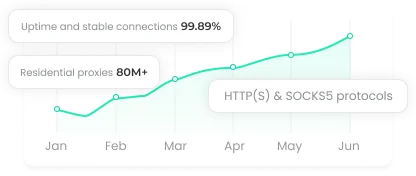
Both proxy types support HTTP, HTTPS, and SOCKS5. That's expected. Compatibility is rarely the issue. What matters is how they behave under load.
ISP proxies usually come with unlimited traffic. That makes them cost-effective for heavy usage. Residential proxies, on the other hand, charge per GB. Efficient usage becomes critical fast.
Rotation is another key difference. Residential proxies rotate automatically, which reduces detection risk. ISP proxies are typically static, though some providers offer limited rotation pools.
Uptime also tells a story. ISP proxies run on servers, so they stay online. Residential proxies depend on peer-to-peer networks, which means occasional instability is part of the package.
Final Thoughts
Both ISP and residential proxies solve different problems, and choosing between them is about matching behavior to workload. When used correctly, they reduce friction, improve reliability, and support scalable operations. The real advantage comes not from the proxy itself, but from how precisely it fits the task at hand.
About the author
 Top-tier residential proxy solutions
 {{item.title}}
Related articles

 394
394


- Please provide your account number, or email address.
- Provide videos or screenshots, and simply describe the problems you are facing.
- Our staff will reply to your message within 24 hours.