
 FRENCH
 EN
EN FRENCH
 繁体中文
繁体中文




180-Minute Sticky Sessions for Stable AI Agent Workflows
Learn how 180-minute sticky residential sessions stabilize long-running AI agent workflows, maintain session continuity, and prevent mid-task IP disruptions.

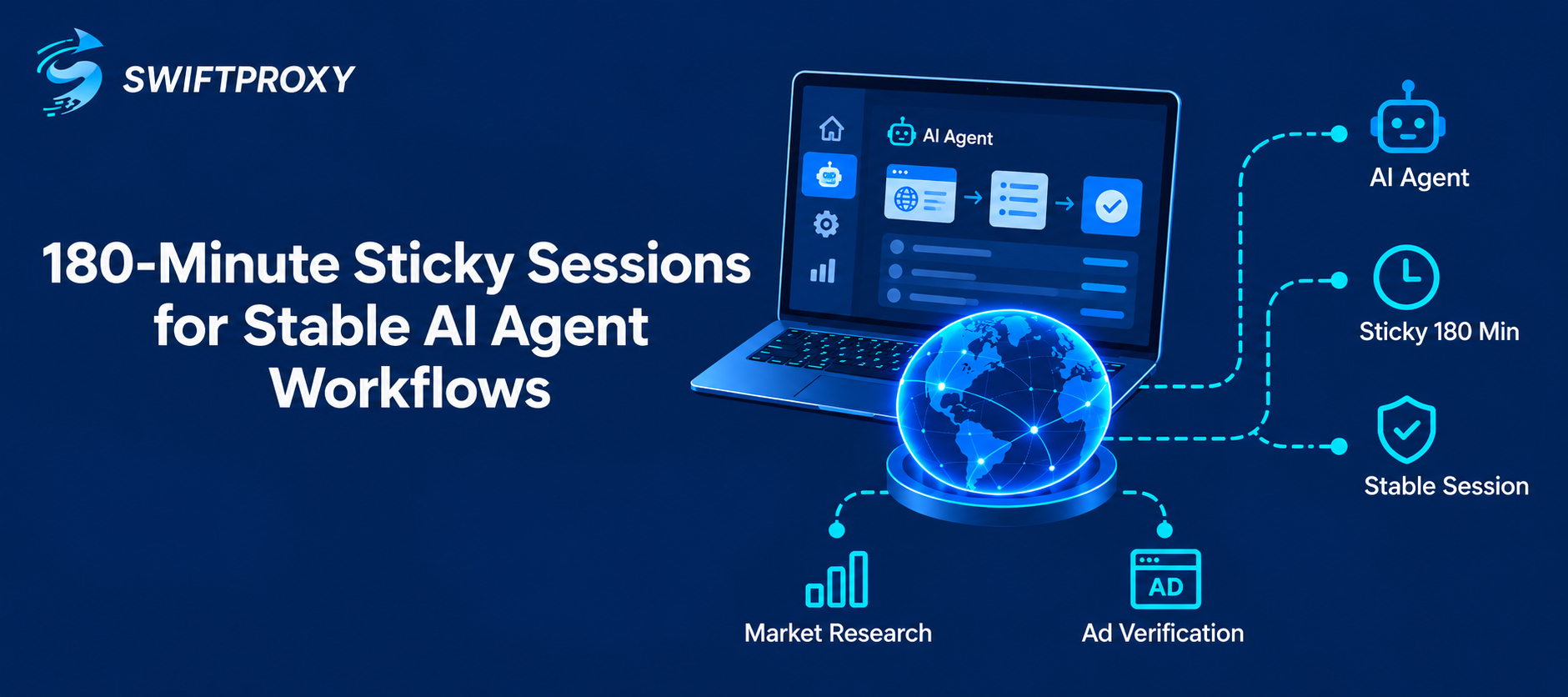
AI agents often perform more than a single web request. A task may involve logging in, applying filters, filling forms, browsing multiple pages, and checking results before making the next decision.
For long-running Agentic Web Scraping, frequent IP changes can disrupt this flow. The browser may keep the same cookies and session data, while the website suddenly sees requests coming from a different IP or location.
Keeping a stable network identity can make these workflows more consistent.
Why Frequent Proxy Rotation Can Disrupt AI Agents
Proxy rotation is useful for large-scale web scraping because it spreads requests across different IP addresses. However, rotating too often during a stateful browser session can create problems.
A sudden IP change may lead to:
- Additional login checks
- CAPTCHA challenges
- Regional content changes
- Inconsistent page results
- Failed multi-step actions
For independent requests, frequent rotation works well. For an AI agent completing one continuous task, keeping the same IP until the workflow ends is often more reliable.
How 180-Minute Sticky Sessions Help
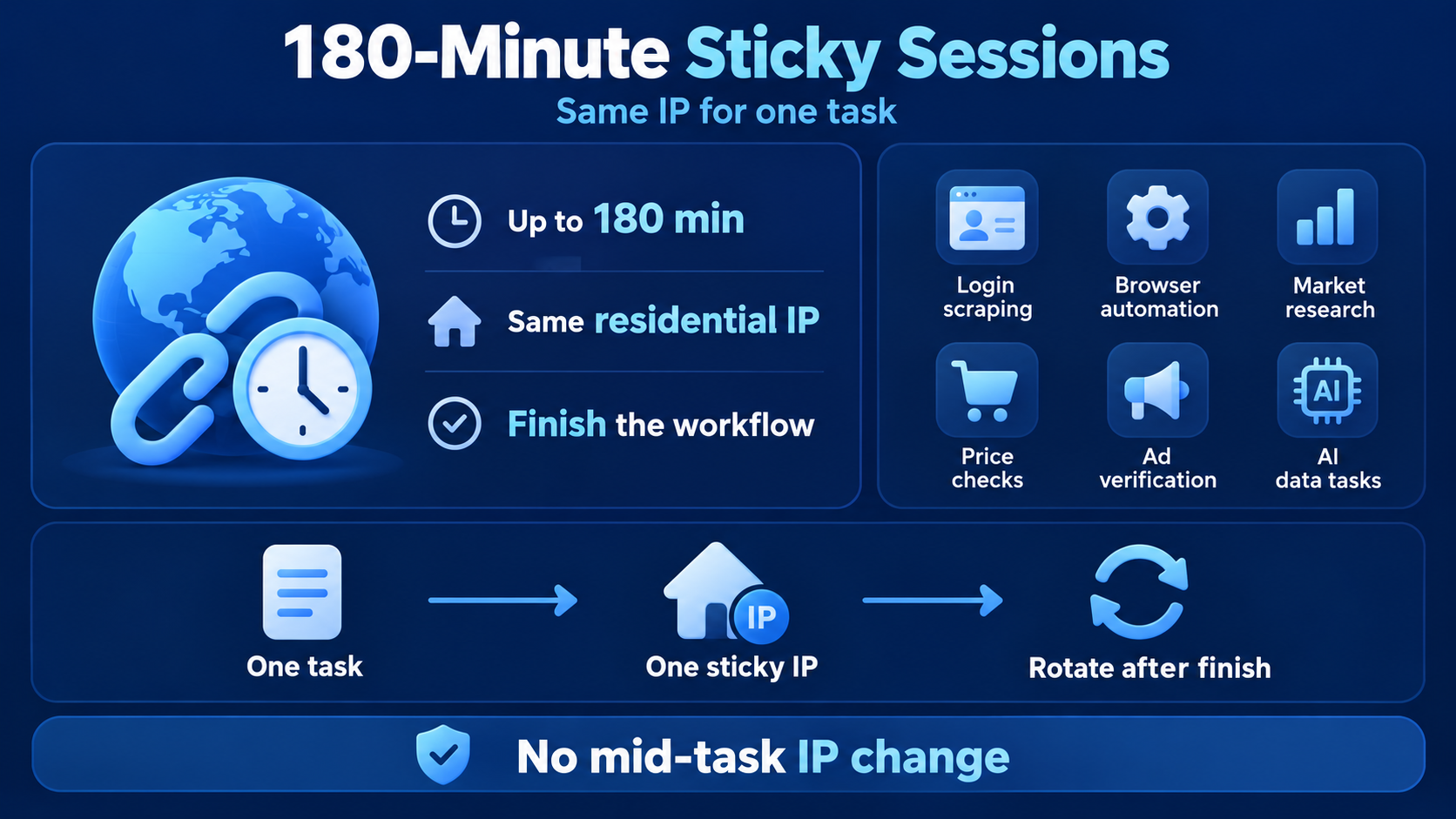
Swiftproxy Residential Proxies support both rotating and sticky sessions. With a sticky session, an AI agent can keep the same residential IP for up to 180 minutes.
This is especially useful for:
- Login-based web scraping
- Multi-page browser automation
- Market research
- Price monitoring
- Ad verification
- AI-driven data collection
A simple workflow looks like this:
One agent task → One sticky IP → Rotate after completion
Instead of changing IPs in the middle of a task, the proxy session stays consistent long enough for the agent to finish the workflow.
Better Consistency for Market Research and Ad Verification
Location can influence the content an AI agent sees online. Product prices, search results, promotions, ads, and landing pages may all vary by region.
If the IP changes during the same task, results from different locations may become mixed together. A sticky residential IP helps maintain one geographic identity throughout the workflow.
Once the task is complete, the system can rotate to another IP or region for the next session.
This gives developers more control over when proxy rotation happens instead of allowing it to interrupt the process.
Sticky vs Static Residential Proxies
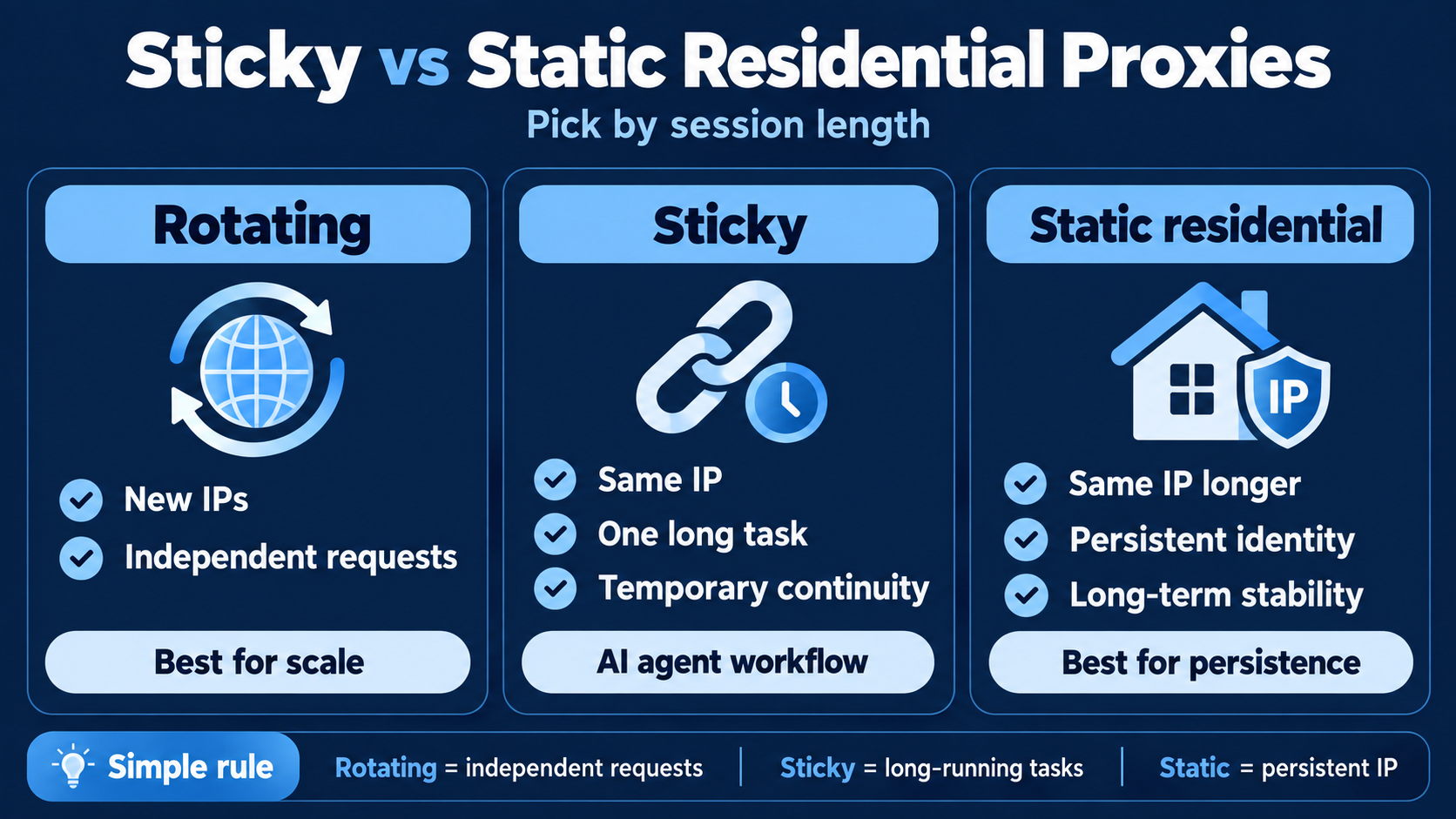
Sticky residential proxies are best when an AI agent needs the same IP for one long-running task while still benefiting from a rotating residential proxy pool.
For applications that require the same IP for much longer periods, Swiftproxy Static Residential Proxies are a better option. They are designed for workloads where persistent IP identity and long-term connection stability matter more than frequent rotation.
A practical rule is simple:
Rotating proxies for independent requests.
Sticky sessions for long-running AI agent workflows.
Static residential proxies for persistent IP requirements.
Build More Reliable AI Agent Workflows
As AI agents move from simple scraping to multi-step browser automation, proxy management becomes part of session management.
Swiftproxy’s 180-minute sticky sessions help maintain a consistent residential IP across longer web scraping, market research, and ad verification tasks.
The goal is not to keep every IP active for three hours. It is to keep the connection stable long enough for the AI agent to complete the job without unnecessary interruptions.
Note sur l'auteur
 Solutions proxy résidentielles de haut niveau
 {{item.title}}
Articles liés

 406
406


- Veuillez fournir votre numéro de compte ou votre adresse courriel.
- Fournissez des vidéos ou des captures d'écran et décrivez simplement les problèmes auxquels vous êtes confronté.
- Notre personnel répondra à votre message dans les 24 heures.