
 FRENCH
 EN
EN FRENCH
 繁体中文
繁体中文




How to Use a Facebook Proxy to Improve Multi-Account Management
Ever tried managing multiple Facebook accounts and hit an unexpected roadblock? One moment you’re posting, commenting, and analyzing data; the next, your account is locked, or an ad campaign is invisible in key regions. Frustrating, right? Welcome to the world where a Facebook proxy isn’t just a convenience—it’s a professional necessity. If you’re serious about digital marketing, research, or global community management, this guide will show you exactly how to stay one step ahead of Facebook’s restrictions, maintain secure logins, and manage accounts without ever tripping an IP flag.

What Is a Facebook Proxy and Why It Matters
A proxy server sits between your device and Facebook. Your requests go through it first, and Facebook only sees the proxy's IP, not yours. Simple? Yes. Powerful? Absolutely.
Here's why:
1. Effortless Multi-Account Management
Managing dozens of client accounts from a single IP? That's a red flag waiting to happen. A Facebook proxy lets you assign a unique, clean residential IP to every account. Each account gets its own digital identity—essential for professional, sustainable multi-account operations.
2. Bypass IP Blocks Instantly
IP bans are the bane of power users. When Facebook flags unusual activity, it can cut off access. The solution: switch to a high-quality proxy with a fresh IP. Problem solved. You're back in, without missing a beat.
3. Navigate Geo-Restrictions Like a Pro
Need to see ad performance in Germany? Or access content restricted to Japan? A proxy allows you to pick a server anywhere. Connect through Berlin, Tokyo, or New York, and Facebook thinks you're local. This is gold for market research and ad verification.
Choosing the Right Proxy for Facebook
Your choice can make or break your workflow.
Datacenter Proxies: Fast, affordable, but often detectable. Not ideal for sensitive logins.
Residential Proxies: The sweet spot. IPs come from real ISPs, looking just like normal user traffic. Reliable, authentic, and perfect for everyday professional use.
Mobile Proxies: The top tier. IPs from mobile carriers. Extremely trustworthy, since most users access Facebook on mobile anyway.
For most professional needs, residential proxies strike the perfect balance between speed, authenticity, and reliability.
How to Pick the Right Proxy Provider
Your proxy is only as good as the provider behind it. Use these criteria:
1. Massive and Clean IP Pool
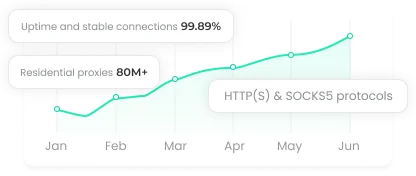
More IPs = less risk of flagged addresses. Swiftproxy, for example, boasts over 80 million residential IPs. Each account can get its own, clean identity.
2. Precision Geo-Targeting
Choose a proxy by country, state, or even city. Targeted connections mean accurate market research and natural account activity.
3. Speed and Stability
Slow proxies make Facebook a chore. Opt for providers with 99.9% uptime. Fast, stable connections save time and prevent login issues.
4. Sticky Sessions
Keep the same IP for the duration of a session. Changing mid-session can trigger security alerts. Sticky sessions ensure your login remains stable.
How to Securely Log into Facebook Using a Proxy
Step 1: Get Your Residential Proxy
Subscribe to a provider like Swiftproxy and generate your proxy credentials.
Step 2: Separate Browser Profiles
Use unique profiles for each account (Chrome "Person," or Firefox Multi-Account Containers). One profile = one proxy = one account.
Step 3: Configure the Proxy
Use extensions like FoxyProxy or Proxy SwitchyOmega. Enter credentials and label each profile clearly.
Step 4: Check Your Connection
Check an IP lookup site. It should show the proxy's location, not your own.
Step 5: Login and Go
With your clean environment, log in to Facebook and carry out your tasks safely.
Long-Term Best Practices
One Proxy Per Account: Golden rule. Keep digital identities distinct.
Location Matters: Match proxy location to account region for natural activity.
Warm-Up Accounts: Ease new accounts into activity gradually.
Prioritize Quality: Free proxies are slow, unreliable, and risky. Residential proxies are a professional investment.
Conclusion
A Facebook proxy is more than a workaround — it's a professional tool that simplifies multi-account management, circumvents IP bans, and enables global access. Pair high-quality residential proxies with sound best practices and you'll navigate Facebook securely, efficiently, and with confidence.
Note sur l'auteur
 Solutions proxy résidentielles de haut niveau
 {{item.title}}
Articles liés

 494
494


- Veuillez fournir votre numéro de compte ou votre adresse courriel.
- Fournissez des vidéos ou des captures d'écran et décrivez simplement les problèmes auxquels vous êtes confronté.
- Notre personnel répondra à votre message dans les 24 heures.