
 FRENCH
 EN
EN FRENCH
 繁体中文
繁体中文




How to Keep Your IP Address Hidden from Online Trackers
Every click, scroll, or video play leaves a trail. Your device silently broadcasts a unique number every time you interact online. That number—your IP address—says more about you than most realize. Some websites use it to tailor content. Others use it to track your movements across the internet. And yes, it can compromise your privacy. Let's cut through the noise. Here's exactly how your IP is tracked—and how you can take control with tools like Swiftproxy.

The Mechanics of IP Tracking
The internet is designed to connect devices. When you type a URL, your computer sends a request to a server. To deliver the page back to you, the server must know your "return address." That's your IP.
So technically, IP tracking is necessary for basic connectivity. But modern websites take it further:
1. Server Logs and Geolocation
Every server keeps logs. These logs reveal where traffic originates. Websites can determine your city, ZIP code, or region. Why? To deliver local content, set region-specific pricing, or even auto-select language settings.
2. Browser Fingerprinting
IP alone isn't enough for some platforms. Advanced tracking combines your IP with browser information—screen size, fonts, version, plugins. This creates a near-unique profile. Even if you delete cookies, sites can still recognize you.
3. Safety and Fraud Prevention
Banks and secure platforms track IPs to detect suspicious activity. A login from a new continent triggers alerts. This protects your accounts—but it also builds a permanent record of your digital behavior.
Can Your IP Address Uncover Your Home Address
It's rare that an IP pinpoints your exact doorstep. Typically, an IP reveals:
- Your city or region
- Your ISP
- Your approximate ZIP code
It does not reveal your street address, apartment number, or name.
But even city-level visibility can be a problem—especially for businesses conducting market research or users protecting sensitive information. Masking your origin is smart.
How to Hide Your IP Address with Swiftproxy
To stay invisible online, you need an intermediary. Swiftproxy does this seamlessly. Websites see the proxy's IP, not yours.
Unlike generic datacenter proxies, Swiftproxy uses residential IPs. These are real addresses assigned to private homes, making your connection appear 100% authentic.
Key Advantages:
- International Access: IPs from 195+ countries. See the web like a local anywhere.
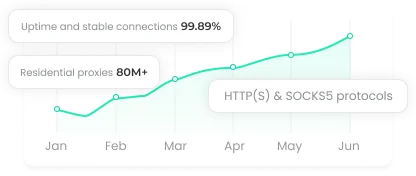
- Extensive Pool: 80M+ active IPs. Never run out of fresh connections.
- Precise Targeting: Filter by country or city for precise insights.
- Stability: 99.9% uptime. Perfect for scraping, ad verification, or managing e-commerce accounts.
Residential IPs vs. Free Tools
Many try free tools. They're tempting—but risky.
| Feature | Free / Datacenter Tools | Residential Proxies |
|---|---|---|
| Detectability | High (often blocked) | Low (appears as real users) |
| Speed and Stability | Slow, unreliable | Fast, 99.9% uptime |
| Privacy | Low (logs may be kept) | High (secure encryption) |
Final Thoughts
Residential proxies offer a reliable, secure, and fast solution, letting you browse safely, gather accurate data, and navigate the web as if you were anywhere in the world. By masking your real IP, you stay in control of your digital footprint while enjoying the freedom and flexibility that standard tools simply can't provide.
Note sur l'auteur
 Solutions proxy résidentielles de haut niveau
 {{item.title}}
Articles liés

 501
501


- Veuillez fournir votre numéro de compte ou votre adresse courriel.
- Fournissez des vidéos ou des captures d'écran et décrivez simplement les problèmes auxquels vous êtes confronté.
- Notre personnel répondra à votre message dans les 24 heures.