
 FRENCH
 EN
EN FRENCH
 繁体中文
繁体中文




Free vs Paid Proxies: The Hidden Difference Behind Success and Failure
A single blocked IP can kill a scraping job in seconds. That small detail is exactly why the proxy market exploded over the past decade! Businesses, analysts, and even gamers now rely on proxy servers to stay anonymous, access geo-restricted data, and keep automated workflows running without interruption. But not all proxies are the same. Free proxy lists appear everywhere online, while paid proxy providers promise speed, privacy, and reliability. The difference between them is not just price. It affects security, performance, and whether your project succeeds or collapses halfway through execution. This guide breaks down how free and paid proxies actually compare, where each option makes sense, and how to choose the right solution for your work.

Why Paid Proxies Are the Default for Serious Work
Paid proxies exist for one simple reason. Reliability matters. When you run tasks like web scraping, competitor monitoring, ad verification, or multi-account management, your IP address becomes your identity online. If that identity gets blocked or flagged, the entire workflow stops.
Paid proxy networks are built to prevent that from happening. Providers maintain large pools of IP addresses and continuously rotate or replace them when necessary. This keeps traffic distributed and prevents websites from detecting unusual activity patterns.
For teams running automation or data pipelines, this consistency makes a measurable difference. A job that would fail after a few hundred requests on a public proxy can often run for hours without interruption when routed through a stable paid proxy network.
Stronger Security and Real Anonymity
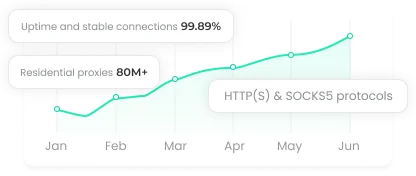
Security is where the difference becomes obvious very quickly. Most paid proxy services support secure protocols such as HTTPS and SOCKS5. These protocols encrypt traffic and prevent third parties from intercepting sensitive information while requests travel between your system and the target website.
Dedicated or private proxies strengthen this protection even further. Because the IP address is used only by you, the risk of reputation damage from unknown users disappears. Websites see consistent behavior from a single source rather than chaotic traffic from hundreds of strangers sharing the same address.
Paid providers also add additional safeguards, including:
Secure protocol support such as HTTPS and SOCKS5
IP authentication or credential-based access
Leak protection and traffic filtering
Dedicated or controlled shared IP pools
These layers significantly reduce the risk of data exposure or account bans. For businesses handling competitive intelligence or sensitive data collection, that level of control is essential.
Speed, Stability, and Global Access
Performance is another area where paid proxies consistently outperform public options. Professional proxy providers operate large infrastructure networks spread across multiple regions. This allows users to select IP addresses located near target websites or specific countries.
The result is faster response times and better reliability. Latency drops, connection time improves, and large volumes of requests can be processed without sudden failures.
Most providers offer several proxy types designed for different workloads:
Datacenter proxies for fast large-scale scraping and automation
Residential proxies using real household IPs that blend naturally into web traffic
Mobile proxies connected through mobile carrier networks for social platforms
ISP proxies combining residential legitimacy with datacenter speed
Each type serves a different purpose. For example, residential proxies are widely used in large scraping operations because they appear as regular home users, which makes them much harder for websites to detect or block.
Operational Tools and Technical Support
Another overlooked advantage of paid proxies is operational support. When you purchase proxies from a reputable provider, you usually receive access to a full management environment. These dashboards allow you to control IP allocation, monitor performance, and rotate addresses when needed.
Common features include:
Proxy management panels
IP health monitoring tools
Automatic IP rotation systems
Bandwidth usage tracking
API integration for automation
And when something goes wrong, support teams are available to help resolve configuration issues quickly. That level of assistance simply does not exist with free proxy lists.
Some providers also offer bonus incentives such as additional IPs during promotions or discounts on large proxy packages. These offers can slightly reduce the cost barrier, though fully functional proxy networks are rarely available without payment.
The Hidden Dangers of Free Proxy Servers
Free proxies attract users for one obvious reason. They cost nothing. But the reality behind many public proxy lists is far less appealing. Free servers are often operated without clear ownership, security standards, or maintenance practices.
In many cases, users have no idea who is running the proxy or what happens to the data passing through it. This lack of transparency introduces serious risks.
Privacy and Security Challenges
Free proxies frequently operate without encryption or modern security protocols. Some only support basic HTTP connections, which means data travels across the network without protection.
This creates opportunities for interception, monitoring, or manipulation of traffic.
Common risks include:
Unencrypted connections that expose login credentials
Logging of browsing activity and IP addresses
Potential injection of malicious scripts or advertisements
Data collection for resale or marketing purposes
Because these servers are open to anyone, malicious actors sometimes deploy them specifically to capture user data. The anonymity promised by free proxies can quickly turn into the opposite.
Slow Speeds and Frequent Connection Failures
Performance issues are another major limitation. Free proxy servers are typically shared by large numbers of users simultaneously. When hundreds or even thousands of people connect through the same IP address, bandwidth becomes heavily congested.
The result is predictable. Connections slow down dramatically. Requests start timing out. Entire proxy nodes disappear without warning.
Another common problem involves blacklisting. Since many users abuse free proxies for spam or automated activity, the IP addresses often end up blocked by popular websites. Once an address appears on a blacklist, accessing certain platforms becomes impossible.
Limited Features and Zero Support
Free proxies also lack the tools needed for serious work. There are no dashboards. No traffic monitoring. No customer support when something stops working.
Users must manually test servers, switch between unstable connections, and troubleshoot issues without guidance. This can waste hours of time while still delivering inconsistent results.
For any workflow involving automation, research, or online operations, these limitations quickly become unacceptable.
When Each Option Actually Makes Sense
Free proxies are not entirely useless. They simply serve a very limited role. For example, they can work for short experiments or casual browsing tasks where privacy and stability are not critical.
Typical low-risk use cases include:
Checking how a website appears in another region
Accessing public news or entertainment content
Learning how proxy routing works in practice
However, even in these situations users should avoid entering sensitive data or logging into important accounts.
Paid proxies become the better choice whenever performance, security, or scale matters.
They are particularly valuable for:
Market research and competitor monitoring
Web scraping and large-scale data collection
Social media management and multi-account setups
Gaming scenarios where low latency is critical
Anonymous browsing with stronger privacy protection
Choosing the correct proxy type also depends on the project. Residential proxies often perform best for large scraping operations, while mobile proxies are more suitable for social media automation. Datacenter proxies remain popular for speed-focused tasks such as bulk account creation or testing.
How to Choose a Reliable Proxy Provider
Not all paid proxy providers deliver the same quality. Before committing to a service, it helps to evaluate several factors.
Focus on the fundamentals:
Size and diversity of the IP pool
Geographic coverage and location targeting
Protocol support and security standards
Availability of rotation and management tools
Quality of customer support and technical documentation
User reviews and long-term industry presence can also provide useful signals. Established providers typically maintain better infrastructure and invest more heavily in maintaining clean IP networks.
Pricing usually depends on the number of IP addresses, proxy type, and contract duration. While premium services may cost more upfront, they often save time and reduce operational headaches later.
Final Thoughts
Free and paid proxies solve the same basic problem. They route your internet traffic through another IP address. But the experience they deliver is dramatically different.
Free proxies provide quick access with minimal commitment, yet they come with security risks, unstable performance, and almost no operational support. Paid proxies require an investment, but they offer reliability, stronger anonymity, and the infrastructure needed for serious online work.
If your goal is casual browsing or experimentation, free proxies may be enough. If your workflow depends on stability, privacy, and consistent access to web resources, paid proxies quickly become the smarter long-term solution.
Note sur l'auteur
 Solutions proxy résidentielles de haut niveau
 {{item.title}}
Articles liés

 487
487


- Veuillez fournir votre numéro de compte ou votre adresse courriel.
- Fournissez des vidéos ou des captures d'écran et décrivez simplement les problèmes auxquels vous êtes confronté.
- Notre personnel répondra à votre message dans les 24 heures.