
 FRENCH
 EN
EN FRENCH
 繁体中文
繁体中文




2026 SEO Proxy Providers: Power SEO with Precision and Speed
Search results don't lie. The brands that dominate organic visibility in 2026 are the ones using clean data, tracking rankings accurately, and testing markets without alerting search engines. SEO proxies have become essential for these strategies. Effective teams rely on proxies to scrape at scale, monitor competitors across regions, and test SERPs without triggering blocks. The difference between success and wasted budget often comes down to the proxy provider powering these operations. Below is a breakdown of seven SEO proxy providers that deliver reliable performance in 2026, focusing only on what truly matters.

What Are SEO Proxies and Why They Matter
SEO proxies act as intermediaries between your tools and the web. They rotate IP addresses, mask your identity, and allow you to collect data without getting flagged.
That matters because Google and other platforms are far more aggressive about blocking repetitive or automated requests than they were a few years ago.
There are two proxy types you'll see most often. Residential proxies use IPs from real internet service providers. They blend in naturally, making them ideal for large-scale scraping, localized SERP checks, and anything that needs to look human.
Datacenter proxies are faster and cheaper. They're less discreet, but they still work well for tasks like bulk rank checks, internal testing, and quick market research.
In 2026, the smartest SEO setups don't choose one or the other. They combine both—using residential IPs where stealth matters and datacenter IPs where speed wins.
The 7 Top SEO Proxy Providers in 2026
These providers stand out for performance, targeting control, and reliability under real SEO workloads—not just on paper.
1. Swiftproxy
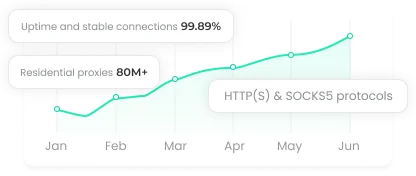
Swiftproxy hits a rare sweet spot. Strong coverage, fair pricing, and flexibility that actually helps SEO teams scale without babysitting infrastructure. If you're scraping SERPs daily, tracking rankings across regions, or running competitor research at volume, this one holds up.
Why it works well for SEO:
- Massive pool of ethically sourced residential IPs across nearly every market
- Residential and ISP options under one roof
- Precise targeting down to city
- Stable performance for long-running scraping jobs
- Fast, human customer support
Best use case:
Large-scale SEO scraping, geo-specific SERP tracking, and teams that want flexibility without enterprise pricing.
2. Bright Data
Bright Data is built for teams that need power and precision—and are willing to pay for it. It's one of the most established names in the space, and for good reason. The network is massive, reliable, and highly configurable.
Why it works well for SEO:
- One of the largest residential IP pools available
- Consistent uptime for high-frequency scraping
- Advanced targeting options for serious SEO research
- Strong compliance and transparency standards
- Excellent documentation for in-house teams
Best use case:
Enterprise SEO teams, agencies managing multiple clients, and data-heavy SERP analysis.
3. PIA S5 Proxy
PIA S5 Proxy is built for speed and scale. It's especially good at handling concurrent SEO tasks without collapsing under load. If CAPTCHA walls or sudden blocks are slowing your workflows, this provider is worth a look.
Why it works well for SEO:
- Huge global IP pool with both static and rotating options
- Handles multiple SEO tools running at once
- Strong performance against search engine restrictions
- Supports both HTTP(S) and SOCKS5
- Solid uptime even during peak usage
Best use case:
Rank tracking at scale, multi-region SEO audits, and automation-heavy setups.
4. Oxylabs
Oxylabs is enterprise-grade through and through. It's not the cheapest option, but it delivers consistency where it counts. When SEO campaigns span continents, reliability matters more than saving a few cents per gigabyte.
Why it works well for SEO:
- Broad global coverage with fast rotation
- Excellent performance for international SERP scraping
- Dedicated account managers for complex use cases
- Strong success rates on difficult targets
- Supports advanced protocols, including SOCKS5 with UDP
Best use case:
Global SEO campaigns, enterprise data collection, and teams that need hands-on support.
5. Decodo
Decodo is a solid choice for SEO professionals who need to scale without overengineering their setup. It's straightforward, dependable, and particularly strong when geo-restrictions come into play.
Why it works well for SEO:
- Large and well-distributed IP pool
- Easy region-based targeting
- Automatic IP rotation with minimal setup
- Strong reputation for customer support
- Good balance between cost and performance
Best use case:
Localized SEO research, regional SERP access, and mid-sized SEO operations.
6. Infatica
Infatica doesn't chase the biggest numbers—and that's not a bad thing. Instead, it focuses on quality IPs and flexible pricing, which can be a win for smaller teams or niche SEO workflows.
Why it works well for SEO:
- Access to residential, mobile, and ISP proxies
- Fine-grained targeting for local SEO tasks
- Consistent performance for rank tracking
- Flexible plans that don't lock you in
- Clean IP reputation across markets
Best use case:
Rank tracking, competitor analysis, and SEO teams that value precision over sheer volume.
7. SOAX
SOAX is all about control. If you like tuning rotation rules, session lengths, and geographic parameters to match specific SEO tasks, this provider gives you room to work.
Why it works well for SEO:
- Large residential and mobile IP pool
- Highly customizable rotation settings
- Strong targeting accuracy
- Reliable performance for scraping and audits
- Responsive support when configs get complex
Best use case:
Advanced SEO workflows that require fine-tuned proxy behavior.
Final Thoughts
Choosing the right SEO proxy is crucial for campaign success. These seven providers offer reliable options for every type of SEO operation, helping teams collect accurate data, track rankings, and test markets safely while maximizing results.
Note sur l'auteur
 Solutions proxy résidentielles de haut niveau
 {{item.title}}
Articles liés

 324
324


- Veuillez fournir votre numéro de compte ou votre adresse courriel.
- Fournissez des vidéos ou des captures d'écran et décrivez simplement les problèmes auxquels vous êtes confronté.
- Notre personnel répondra à votre message dans les 24 heures.