







The Critical Role of Proxies in Modern Business Operations
A single exposed IP address can reveal far more than most companies expect. It can expose research behavior, automation tools, and even competitive strategy. In a world where data is currency, protecting that digital footprint is indispensable. Businesses now operate in an environment where everything happens online. Marketing campaigns run through automation platforms, analytics tools constantly gather market signals, and teams rely on data to guide nearly every decision. The opportunity is enormous, but so is the risk. That is exactly why business proxies have moved from a technical tool to a core security asset. Companies are using them to protect their IP identity, secure sensitive operations, and maintain uninterrupted access to the data they depend on.

The Modern Role of Business Proxies
Proxies used to serve one simple purpose. Hide an IP address and route traffic somewhere else. That definition barely scratches the surface today. Modern proxy services act as a protective layer between a company's systems and the wider internet, shielding digital activity from tracking systems, automated defenses, and malicious actors.
For businesses running automation or large scale data collection, this layer is critical. A proxy ensures requests appear legitimate while protecting the underlying infrastructure that generates them. That means teams can run research, scraping, or testing workflows without exposing internal servers or triggering platform restrictions.
Your IP address is effectively your company's digital fingerprint. Once it becomes visible, competitors, platforms, or attackers can analyze traffic patterns and potentially block or exploit your activity. Rotating proxy networks solve this problem by distributing requests across large pools of secure IPs.
The result is simple. More privacy. More stability. Far fewer disruptions.
Why Businesses Rely on Proxies
Modern companies use proxies for several practical reasons. These use cases are not theoretical. They are daily operational needs across marketing teams, e commerce brands, and data driven organizations.
Protection from Data Monitoring and Targeting
Every request you make online leaves a trace. Advertising networks, search engines, and competitor monitoring tools constantly track IP addresses to identify unusual behavior or automated activity.
This creates a problem for companies conducting competitor research or price monitoring. Without protection, those activities can quickly trigger blocks or distort the data being collected.
Residential proxies solve this by routing requests through real consumer IP addresses. Traffic appears natural and distributed, allowing teams to collect accurate market intelligence without detection. The data remains reliable, and the operation stays invisible.
Security Against Online Threats
Corporate networks are valuable targets. Hackers constantly scan the internet looking for exposed infrastructure that can be exploited.
A proxy introduces a critical buffer layer. Instead of connecting directly to the internet, internal systems communicate through the proxy network first. This masks the company's real IP address and makes it significantly harder for attackers to locate or target internal services.
For industries handling sensitive information such as finance, SaaS, and e commerce, this extra layer of separation can dramatically reduce risk.
Secure Data Collection
Data drives modern decision making. SEO teams track search rankings, marketing departments verify ad placements, and analysts gather competitor insights from public sources.
However, large scale data collection quickly attracts attention from websites trying to block automated activity. Without protection, IP addresses are flagged and scraping pipelines collapse.
Rotating proxies distribute requests across thousands or even millions of addresses. This spreads traffic naturally and prevents individual IPs from triggering restrictions. Companies can maintain consistent data pipelines while keeping corporate infrastructure hidden.
Get Access to Regional Market Data
Many online platforms show different information depending on location. Pricing, search results, advertisements, and even product availability often vary by region.
Businesses need visibility into these localized experiences. Without it, they miss critical competitive insights.
A global proxy network allows teams to route traffic through IP addresses in different countries or cities. That means analysts can view websites exactly as local users do and make decisions based on real regional data.
High Performance and Stability
Not all proxies deliver the same results. Cheap or overloaded networks often lead to slow speeds, unreliable connections, and IP addresses that are already flagged by websites.
For companies running automation or research workflows, those issues quickly become operational bottlenecks. Slow proxies delay data pipelines, while poor IP quality leads to constant bans and interruptions.
That is why reliability has become a major factor when selecting a provider. Businesses increasingly prioritize networks with strong uptime, clean IP pools, and fast response times.
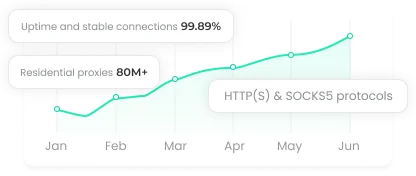
One provider gaining attention in 2026 is Swiftproxy. The network reportedly operates more than seven million active IP addresses and maintains response times below 500 milliseconds, which is critical for large scale automation.
The platform offers several proxy types designed for different use cases:
Residential proxies for natural browsing and data collection
ISP proxies for stable, high speed connections
This variety allows businesses to match the right proxy type with the right task, improving both efficiency and reliability across operations.
Privacy Protection and Compliance
Data protection regulations continue to tighten around the world. Companies now face strict requirements around how they collect, process, and store information.
Proxies play an important role in responsible data practices. They allow organizations to separate traffic streams, limit exposure of internal infrastructure, and control how automated systems interact with external platforms.
However, the provider itself also matters. Ethical sourcing of IP addresses and transparent infrastructure are essential to avoid compliance risks.
Reputable networks focus heavily on legitimate IP sources and privacy protection. Residential and mobile addresses obtained through verified partnerships are far more reliable and far less likely to be flagged or blacklisted.
For businesses operating globally, this level of compliance protection is just as important as speed or scale.
Final Thoughts
Business proxies have evolved into essential infrastructure for modern companies. They protect digital identity, support secure data operations, and enable reliable market insights. As online competition intensifies, organizations that safeguard their data access and privacy will maintain a stronger strategic advantage.
關於作者
 頂級住宅代理解決方案
 {{item.title}}

 403
403