






How CAPTCHAs Affect Automation and Online Projects
Every year, billions of CAPTCHAs are solved worldwide. Some are simple "I'm not a robot" clicks, others are tricky image puzzles that make you squint at traffic lights or storefronts. They seem harmless. But for anyone trying to automate purchases or scale web projects, CAPTCHAs are a hard stop. The question is—can you get around them without getting blocked? The answer is nuanced, but yes, with the right strategy, you can.


Understanding CAPTCHAs
CAPTCHA stands for Completely Automated Public Turing Test to Tell Computers and Humans Apart. The concept is simple—it distinguishes humans from bots. They were invented in 2000 by Luis von Ahn to fight spam, such as fake Yahoo accounts flooding the web. At first, CAPTCHAs were just squiggly letters and numbers, but today they include a mix of text, images, and behavioral tracking.
You'll encounter CAPTCHAs on checkout pages, login screens, and sign-up forms. They are more than just annoyances because they act as a layer of defense. CAPTCHAs protect sites from fraud, prevent automated purchases, and make sure sneakerheads cannot grab the latest drops in milliseconds.
The Evolution of reCAPTCHA
Google's reCAPTCHA is the modern evolution. Originally, it helped digitize old books while preventing bots. Now, it's everywhere. You might see the simple checkbox, "I'm not a robot," but it's anything but simple. Behind the scenes, it tracks mouse movements, scrolling, and timing. Bots moving in rigid, unnatural paths get flagged immediately.
The image-based CAPTCHAs are even trickier. They ask you to identify crosswalks, buses, or street signs—things humans do effortlessly, but machines struggle with. That gap is shrinking, though. Advances in AI and machine learning mean bots are increasingly capable of passing these tests.
How CAPTCHAs Actually Function
Humans excel at pattern recognition. We recognize distorted letters, unusual fonts, and ambiguous images without thinking. Bots, even sophisticated ones, rely on algorithms and can fail when the input is slightly off. This is why a CAPTCHA designed for human intuition remains surprisingly effective—but only if it's not predictable.
Approaches to Overcoming CAPTCHAs
There are several approaches:
- Human-Assisted Solving Services: Platforms like 2Captcha or Anti-Captcha employ real humans to solve CAPTCHAs for you. They are fast, reliable, and scaleable.
- Automation with AI: Image recognition APIs can identify patterns and objects in CAPTCHAs. Machine learning models improve over time, making this a viable option for repetitive tasks.
- Behavioral Tactics: CAPTCHAs flag suspicious activity. Avoid sending too many requests from the same IP. Use rotating proxies. Simulate human-like mouse movements. Every detail counts.
Why Proxies Matter
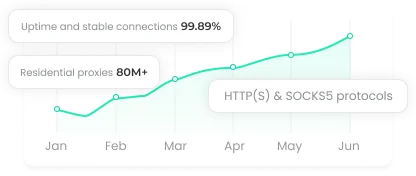
You can have the smartest bot in the world, but without the right proxy setup, CAPTCHAs will block you. Residential proxies, like those from Swiftproxy, rotate IP addresses to keep your footprint hidden. They make it nearly impossible for sites to detect automated activity. Combine these with human-like behavior, and your bots can move freely.
Conclusion
With the right combination of proxies, human-like behavior, and strategic tools, CAPTCHAs can be navigated without triggering blocks. Proper setup ensures automation remains smooth, scalable, and secure, turning a major obstacle into a manageable part of web operations.
關於作者
 頂級住宅代理解決方案
 {{item.title}}

 213
213